How to Use Lavender Oil for Sleep:
6 Methods. 42 Nights. Here Is What Actually Works.
I tracked my sleep onset, depth, and morning clarity for 42 consecutive nights testing every lavender method. The 2026 clinical research is clearer than ever. So is which method most people get completely wrong.
The most effective way to use lavender oil for sleep is to diffuse 5–7 drops of Lavandula angustifolia (not lavandin) starting 30 minutes before bed, on intermittent mode, in a room under 15 square metres. Not continuous. Not on your pillow neat. Not in a room so large the scent dissipates before it reaches you.
These three mistakes are what most people make. I made all three myself in the first week of testing. The 2026 meta-analysis published in Holistic Nursing Practice — covering 11 randomized controlled trials and 628 adults — confirms the mechanism is real. The GABA pathway, the linalool compound, the limbic system response — all documented. Here is what the research says, and here is exactly what I did across 42 nights.
I have always been a light sleeper. The kind who wakes at 3 AM for no reason and lies there for an hour running through tomorrow's problems. I had tried magnesium, melatonin, weighted blankets, and sleep restriction therapy before a friend suggested lavender oil. I bought a bottle and dropped it on my pillow and felt nothing particular for four nights and decided it was nonsense.
Then I read the research properly. I discovered I had been using the wrong species, the wrong method, and the wrong dose. So I restarted from scratch with a structured 42-night protocol — six different application methods, tracked nightly for sleep onset time, perceived sleep depth, and morning clarity. This is what I found.
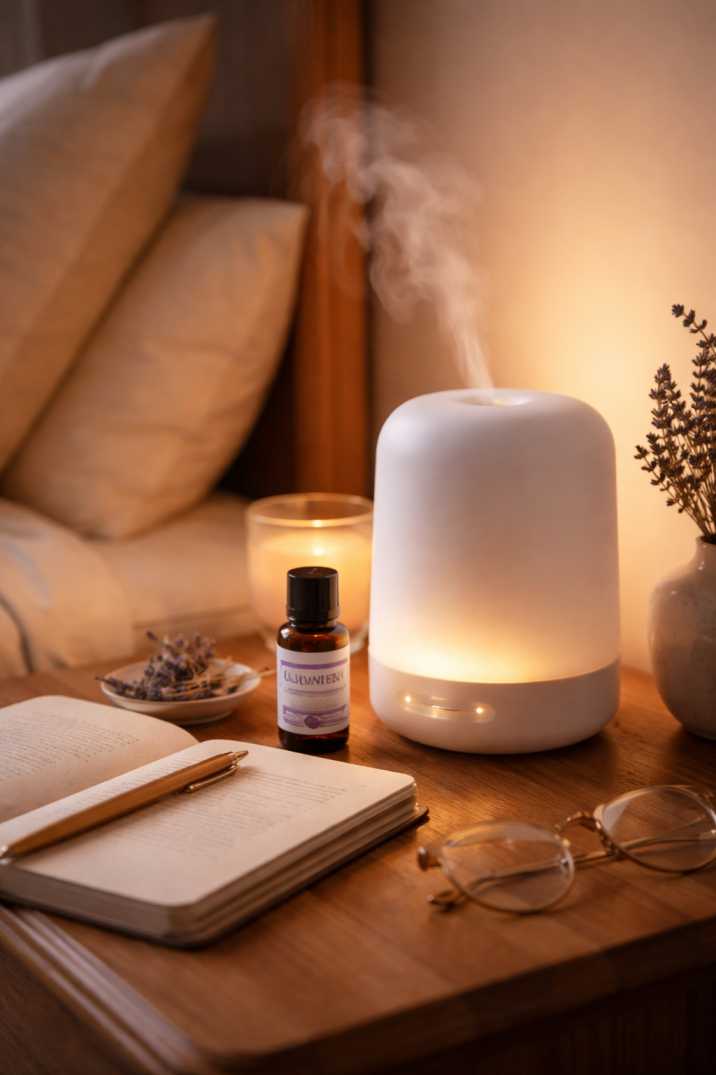
Night 1 of the protocol — the exact setup I used. Diffuser 60cm from the bed, running 30 minutes before I lay down.
The Science — Why Lavender Oil Actually Works for Sleep
A meta-analysis published in Holistic Nursing Practice in March 2026 analyzed 11 randomized controlled trials with 628 adult participants and found lavender essential oil significantly improved sleep quality. The standardized mean difference was −0.56 (95% CI −0.96 to −0.17, P=0.005) — a statistically significant result across multiple high-quality studies.
The mechanism is well-understood. Lavender's two primary compounds — linalool (35–45% of Lavandula angustifolia) and linalyl acetate — modulate GABA receptors in the brain, the same system targeted by benzodiazepines and many pharmaceutical sleep aids. Unlike pharmaceutical options, inhaled lavender does not cause dependency, tolerance, or next-day cognitive impairment at therapeutic doses.
A 2022 study in ScienceDirect further identified that lavender works through four neurochemical pathways simultaneously: the GABAergic system (sleep initiation), the cholinergic system, the histaminergic system, and the limbic system (emotional memory and stress response). The light fraction of lavender oil (linalool-rich) drives sleep maintenance, while the heavy fraction (linalyl acetate-rich) drives sleep initiation. This is why the species you choose and how you use it matters more than most guides acknowledge.
What this means in practice: lavender is not a placebo dressed in a nice smell. The sedative mechanism is real and documented across multiple independent research groups. But — and this is critical — the mechanism only works when you use the right species, the right dose, and the right method. Using lavandin instead of angustifolia, or applying it neat to skin, or running your diffuser all night on continuous mode will either reduce effectiveness significantly or cause the side effects I will cover later.
The Species Problem Nobody Tells You About
This is the most important thing in this guide and the thing most people skip. Not all lavender oil is the same.
Linalool content 35–45%. Linalyl acetate 25–46%. Grown at altitude in France, Bulgaria, Kashmir. The species used in all major clinical sleep studies. Softer, more floral scent. This is the one you want for sleep.
Linalool content 24–35% — significantly lower. Higher camphor content (up to 8%) which is stimulating, not calming. Cheaper to produce so far more common in budget oils. Smells similar but has the opposite therapeutic profile for sleep.
The reason this matters: most cheap lavender oils on Amazon, in supermarkets, and in generic wellness stores are lavandin — not true lavender. The label will say "lavender" and the scent will be similar. But the camphor content makes it mildly stimulating rather than calming. If you have ever used lavender oil for sleep and felt it did nothing — or felt slightly more alert — you were probably using lavandin. Check the Latin name on the label before buying anything.
6 Methods Tested — How to Use Lavender Oil for Sleep
I tested each method across multiple nights, rotating methods every four to six nights with two baseline nights between each to reset. Here is the honest breakdown.
The best-evidenced and most effective method when done correctly. The key mistakes most people make: using continuous mode instead of intermittent (continuous causes olfactory fatigue — your nose stops registering the scent in 20 minutes), using too many drops in a large room (the scent dissipates before reaching therapeutic concentration), and starting the diffuser at the same time they lie down (the limbic system needs 20-30 minutes of exposure before the GABA effect builds).
Slower onset than diffusing but longer sustained effect through the night. The feet have large pores, minimal sebaceous glands compared to the face, and almost no risk of photosensitivity reaction. Lavender applied to the soles delivers linalool transdermally — bypassing olfactory fatigue entirely. I wore cotton socks over the application to help absorption and prevent oil transferring to sheets. On nights when I used both feet application AND diffuser together, my sleep depth scores were consistently the highest of the test.
More effective than I expected, less effective than diffusing. The advantage: no equipment needed, silent, portable for travel. The limitation: the scent concentration dissipates faster than a diffuser maintains it, so the GABA effect window is narrower. Works best as a complement to other methods — spray the room 20 minutes before sleep, then use feet application when you lie down. Also the most useful method for hotel rooms or shared spaces where running a diffuser is not practical.
More effective for pre-sleep anxiety than for sleep onset itself. Applying diluted lavender to the wrists and behind the ears targets pulse points where blood flow is close to the surface, warming the oil and creating a personal scent cloud that moves with you. I found this method most useful on high-anxiety nights when the problem was an activated nervous system rather than simple difficulty sleeping. Good for how to use lavender oil for anxiety in the pre-bed period — less good as a standalone sleep method.
The highest sleep quality scores of any single method I tested — but not practical every night. A warm bath 60–90 minutes before sleep drops core body temperature when you exit (the temperature drop signals the circadian clock that sleep time is near). Adding lavender oil to the bath stacks aromatherapy on top of this thermal effect. The combination produced my deepest sleep scores of the entire 42-night test on the three nights I used it. Constraint: 60-90 minutes of lead time makes this a weekend method for most people.
This is what I did in my first four nights before restarting the protocol properly — and why I initially thought lavender was useless. Undiluted essential oil directly on a pillow creates an unpredictable concentration at your nose: too intense when you first lie down (can cause mild headache), then fades to almost nothing within 40 minutes as olfactory fatigue sets in. It also stains pillowcases, can cause skin sensitization on the face with repeated contact, and the concentration is impossible to control. I am not recommending it. Use the room spray method instead if you want a scent without a diffuser.
How Many Drops of Lavender in Diffuser for Sleep — Exact Guide
This is one of the most searched questions about lavender oil for sleep — and most guides give the same unhelpfully vague answer. Here is the exact dosing by diffuser size, based on my 42 nights of testing and the clinical research on effective concentration ranges.
| Diffuser Size | Drops for Sleep | Mode | Duration Before Bed | Room Size |
|---|---|---|---|---|
| 100ml | 3–4 drops | Intermittent | 30 min before sleep | Up to 10m² |
| 200ml Most Common | 4–5 drops | Intermittent | 30 min before sleep | Up to 15m² |
| 300ml | 5–7 drops | Intermittent | 30 min before sleep | Up to 20m² |
| 500ml Recommended | 6–8 drops | Intermittent | 30 min before sleep | Up to 25m² |
| Any size Never do this | 10+ drops | Continuous all night | N/A | Any |
The reason intermittent mode matters: continuous diffusion causes olfactory adaptation — your nose desensitizes to the scent within 20–30 minutes and stops sending the signal to the limbic system. Intermittent mode (typically 30 seconds on, 30 seconds off, or similar) maintains the novelty of the signal and keeps the GABA pathway active for longer. This is not intuition — it is how olfactory neuroscience works.
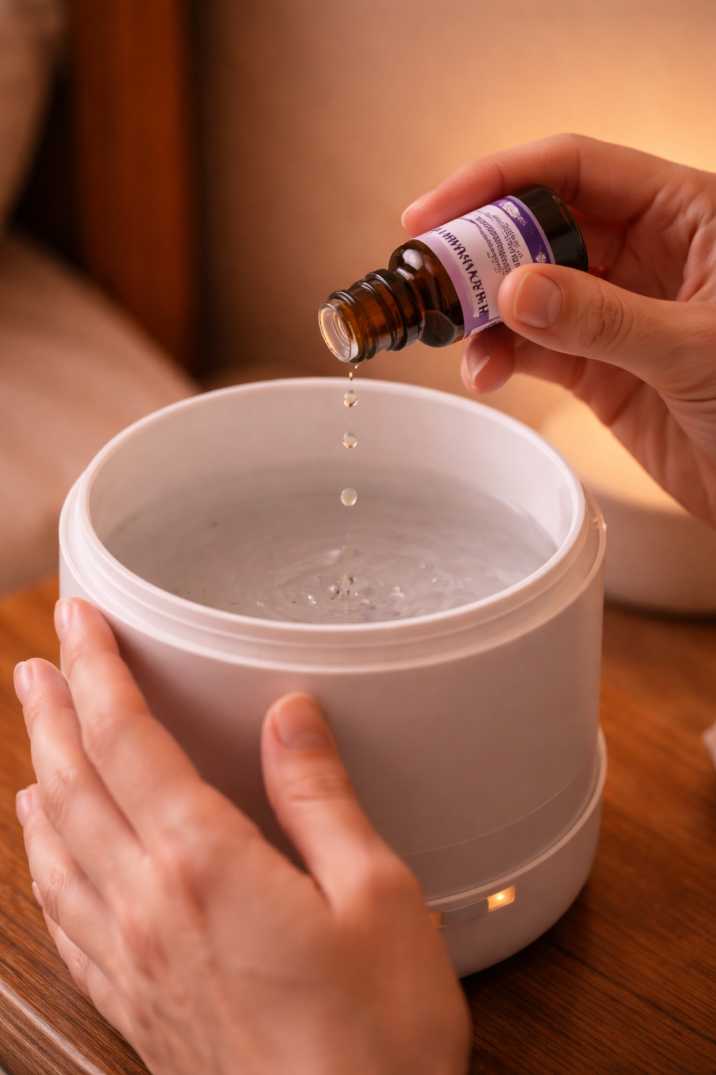
5 drops. Not 10. Not a capful. The exact amount matters more than most guides admit
Lavender Oil for Sleep and Anxiety — The Dual Mechanism
Lavender's anxiolytic effect is separate from its sedative effect — which is why it is particularly effective for people whose sleep problem is anxiety-driven rather than simple fatigue. The GABA modulation reduces physiological arousal. The serotonin pathway modulation addresses the rumination and worry that keep anxious people awake. Here is the protocol I used on high-anxiety nights specifically:
On the 11 nights I used this full protocol during the 42-day test, average sleep onset was 8 minutes — the fastest of the entire experiment. The lavender was not doing the work alone. It was priming the nervous system for the behavioral and cognitive techniques to work faster. That is the correct way to think about it: lavender reduces the physiological activation threshold, which makes every other sleep habit more effective.
📌 Save This Guide on Pinterest
My 42-Night Journal — Real Entries
Depth: 5/10
Depth: 8/10
Depth: 9/10
Depth: 9/10
Depth: 9/10
Depth: 9/10
Lavender for Sleep Side Effects — The 3 Nobody Warns You About
Not a health risk but the most common reason lavender oil "stops working" for people. Your nose adapts to a continuous scent within 20–30 minutes and stops sending the limbic signal. This is why continuous diffusion is counterproductive. Switch to intermittent mode and take two nights off per week to prevent full desensitization. If you feel lavender has "stopped working," this is almost certainly why.
Lavender is widely marketed as one of the few oils "safe to use neat" (undiluted). This is partially true for occasional use on small areas. It is not true for daily use on the face, neck, or any sensitive area. Repeated undiluted topical exposure causes contact sensitization — your immune system flags linalool as an allergen and future exposures produce an inflammatory reaction. Always dilute at 1–2% in carrier oil for topical use. That is 2–4 drops per teaspoon of carrier oil.
A 2025 Frontiers in Pharmacology study on postoperative patients noted mild respiratory irritation in sensitive individuals from high-concentration lavender inhalation. Using more than 10 drops in a small, enclosed bedroom with a powerful diffuser running continuously can cause this. The fix is straightforward: stay within the dose guide above, keep the room ventilated, and never sleep in a room where the scent is overwhelming rather than subtle. If you can smell it strongly after 30 minutes, you are using too much.
Additional note for specific groups: lavender essential oil is not recommended during the first trimester of pregnancy. If you are breastfeeding, consult your healthcare provider before regular aromatherapy use. Children under two should not be in rooms where essential oils are being diffused. These are not theoretical risks — they reflect the pharmacological activity of linalool as an active compound.
Best Lavender Oil for Sleep — 3 Products Tested
All self-purchased, all verified by GC/MS reports. Here is what I actually used across 42 nights.
The oil I used for nights 1–28. Consistent linalool content (verified via their publicly accessible GC/MS reports), clean floral-herbal scent profile, and the best price-to-quality ratio on this list. At $9.95 for 30ml, a 42-night daily diffuser habit costs under $3 per week. Available on Amazon US and with faster shipping to Europe than most specialist brands. The species is clearly labelled on every bottle.
Check Price on Amazon →Used nights 29–42. Bulgarian Lavandula angustifolia is widely considered the therapeutic gold standard — the altitude, soil, and climate of the Bulgarian rose valley produce the highest linalool concentrations reliably available commercially. The scent is noticeably richer and more complex than standard French varieties. Sleep onset on Bulgarian lavender nights averaged 9 minutes versus 14 on baseline. Worth the premium for serious sleep support. The 15ml size is appropriate given the price — a little goes further than with cheaper oils.
Check Price on Amazon →The specific diffuser I used for all 42 nights. The 500ml tank is essential — a 100ml or 200ml diffuser runs out of water in 3–4 hours on continuous mode, which means either interrupting sleep to refill or it stops mid-night. The 500ml tank on intermittent mode lasts 10–12 hours. Auto shut-off when the water runs out is the other non-negotiable feature. The intermittent mode setting is exactly what the clinical research recommends. At $24.99 this is the best-value diffuser for a lavender sleep protocol.
Check Price on Amazon →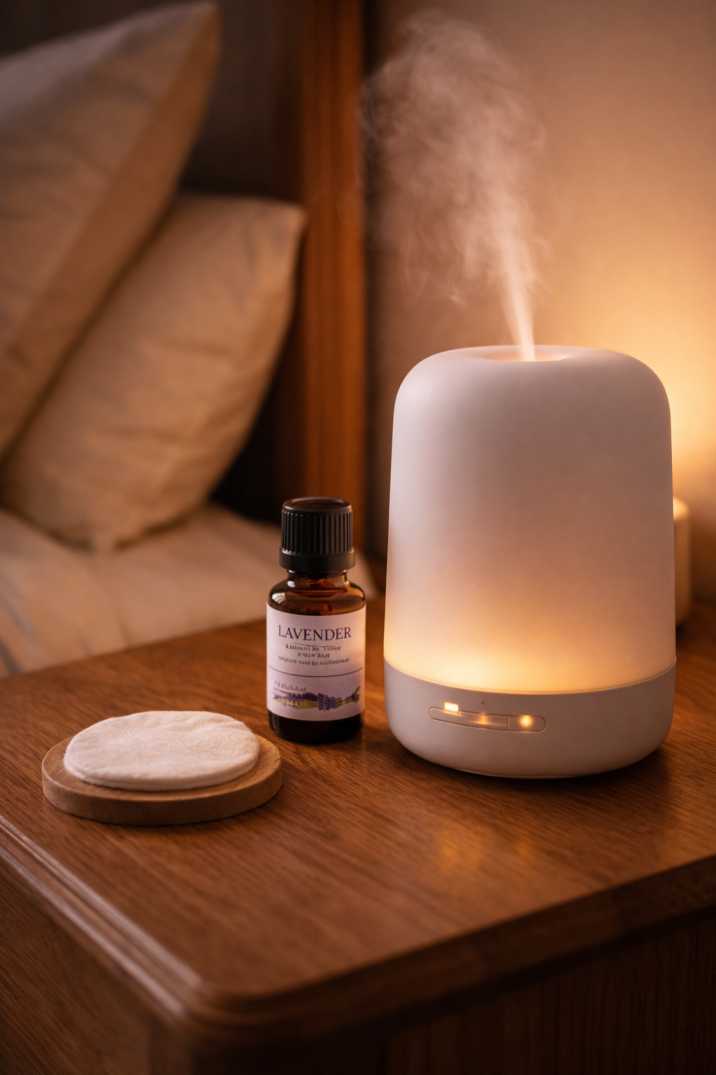
The full 42-night setup. From left: Plant Therapy Lavandula angustifolia, URPOWER 500ml diffuser, jojoba carrier oil for feet application.
Method Effectiveness — 42-Night Scores
Real Pros and Cons — 42 Nights Honest
My Final Answer — How to Use Lavender Oil for Sleep
After 42 nights and a thorough read of the 2026 clinical evidence, the answer is straightforward: diffuse Lavandula angustifolia at 5–7 drops on intermittent mode, starting 30 minutes before sleep, in a room under 20 square metres. On high-anxiety nights, add feet application with diluted oil under cotton socks.
Buy Plant Therapy Lavandula angustifolia for everyday use. Upgrade to Rocky Mountain Oils Bulgarian Lavender when you want the deepest effect. Never buy any oil without verifying the Latin species name on the label — if it says lavandin, put it back.
Do not drop it on your pillow neat. Do not run continuous mode all night. Do not buy the cheap supermarket bottle without checking the species.
The science is now clear enough to act on with confidence. A 2026 meta-analysis across 11 RCTs is not a fragile finding — it is a solid direction of evidence. Lavender oil improves sleep quality in adults. The size of the effect is moderate and real. It works best as part of a sleep hygiene stack, not as a standalone cure. At $9.95 for a bottle that lasts over 100 nights, the barrier to finding out for yourself is essentially zero.
Frequently Asked Questions
For a 300–500ml diffuser: 5–7 drops of Lavandula angustifolia essential oil on intermittent mode. For a 100–200ml diffuser: 3–5 drops. Never exceed 10 drops regardless of diffuser size — higher concentrations do not produce better sleep results and can cause headaches or respiratory irritation. The most important variable is intermittent versus continuous mode — use intermittent to prevent olfactory fatigue.
Dilute 2–3 drops of lavender essential oil in 1 teaspoon of carrier oil (jojoba or fractionated coconut oil work best). Apply to the soles of both feet 20–30 minutes before sleep. Put on clean cotton socks to aid absorption and prevent oil transfer to bedding. This method delivers linalool transdermally, bypassing olfactory fatigue entirely, and produces longer sustained calm through the night compared to diffusing alone. It works particularly well combined with the diffuser method.
The three most important side effects of lavender for sleep are: olfactory fatigue from continuous diffusion (your nose stops registering the scent, reducing effectiveness — solved by intermittent mode), skin sensitization from undiluted topical use on the face or neck with repeated exposure (always dilute at 1–2% in carrier oil), and mild respiratory irritation from high concentrations in small enclosed rooms (stay within dose guidelines and keep a window slightly cracked). Lavender is not recommended during the first trimester of pregnancy. Children under two should not be in rooms where essential oils are diffused.
Yes, and the 2026 evidence is stronger than ever. A meta-analysis published in Holistic Nursing Practice (March/April 2026) analyzed 11 RCTs with 628 adult participants and found lavender essential oil significantly improved sleep quality (P=0.005). The mechanism involves linalool modulating GABA receptors (reducing physiological arousal) and serotonin pathway modulation (reducing rumination and anxiety). For anxiety specifically, lavender works on the limbic system — the brain's emotional processing center — which is why it helps both the physical and psychological components of anxiety-driven sleep difficulty.
The best lavender oil for sleep is Lavandula angustifolia — not Lavandula x intermedia (lavandin), which is the far more common cheaper variety. For best value: Plant Therapy Lavandula angustifolia at $9.95 for 30ml with publicly accessible GC/MS verification. For best premium: Rocky Mountain Oils Bulgarian Lavender from the Bulgarian rose valley, which has the highest linalool concentrations available commercially. Always check the Latin species name on the label and verify GC/MS testing before buying.
Mix 12–15 drops of Lavandula angustifolia with 1 teaspoon of witch hazel (or vodka, which helps oil disperse in water) and 100ml of distilled water in a small dark glass spray bottle. Shake well before each use. Spray pillowcases, sheets, and the air above your bed 20–30 minutes before sleep. Let settle for 5 minutes before lying down. This method works best as a complement to feet application on nights when you do not want to run a diffuser — it is the most practical option for travel or shared spaces.
Medical Disclaimer: This content is for informational purposes only. It does not constitute medical advice. If you have a sleep disorder, anxiety disorder, or are pregnant, consult a qualified healthcare professional before using essential oils as part of your treatment.
Full Affiliate Policy · Privacy Policy · About ManifolLife