Gentle movement guide
Best Yoga Poses for Back Pain: 9 Gentle Poses and a 15-Minute Routine
Most back-pain yoga advice is either too vague to follow or too ambitious to trust. This guide keeps it practical: nine low-load poses, how to do each, what to change, and an honest look at what yoga can and can't do.
The short answer
The best yoga poses for back pain are the gentle, supported ones: Cat-Cow, Child's Pose, Knee-to-Chest, Reclined Spinal Twist, Bridge, Sphinx, a bent-knee Downward Dog, Reclined Figure-Four, and Legs Up the Wall. Move slowly, stay in a comfortable range, and stop anything that causes sharp, traveling, or tingling pain.
Picture the moment: you stand up after hours at a desk, and your lower back answers with a dull, stiff ache that takes a few steps to loosen. Nothing is "wrong" enough for a doctor, but it bothers you enough to search for help.
For that ordinary, on-and-off stiffness, gentle yoga is an approachable thing to try. It costs almost nothing and teaches you which positions your back likes. The trick is choosing poses that ease your back instead of provoking it, and knowing when it needs more than stretching.
What the evidence honestly says about yoga and back pain
Here's the part most articles skip. For chronic non-specific low back pain, the long-running kind with no single identifiable cause, yoga has been studied fairly extensively, and the results are encouraging but modest.
American College of Physicians guidelines list yoga among the non-drug options worth trying first for chronic low back pain, though on low-quality evidence. A more recent Cochrane review of 21 trials found low-to-moderate certainty that yoga, compared with no exercise, produces small improvements in function and pain, small enough that they may not be clinically important on average. An earlier Cochrane analysis also found that around five percent more yoga participants reported increased back pain, similar to the risk with other back-focused exercise.
What does that mean for you? Yoga is a reasonable, low-cost thing to try. It is not a cure, and the benefit may come from steadily moving a stiff back and lowering stress more than from any single pose. Treat it as one tool and judge it by how your back responds over a few weeks.
Before you start: who should check with a clinician first
Get medical advice before stretching if you have any of these
- Back pain that started after a fall, accident, or other injury
- Numbness, tingling, or weakness in a leg or foot
- Fever, unexplained weight loss, or pain that is worse at night
- A history of cancer, osteoporosis, or a spinal condition
- Pain that hasn't improved after several weeks
Seek urgent care right away for loss of bladder or bowel control, or numbness in the groin or inner thighs. Those are not stretching problems.
If none of those apply and your back is just stiff, these ground rules keep things safe:
- Sharp pain is a stop sign. A mild stretch is fine. Sharp, burning, or traveling pain means back out.
- Never force range. Where your body stops is where the pose is, today.
- Breathe steadily. Holding your breath means you're pushing too hard.
- Skip poses that worsen a flare-up. You can return to them in a few days.
Which back pain routine fits your day?
Pick your situation
Tap the one that sounds most like you for a shorter list from the nine poses below.
The 9 best yoga poses for back pain
Each pose includes how to do it, how long to stay, why it helps, and what to change if it doesn't feel right.
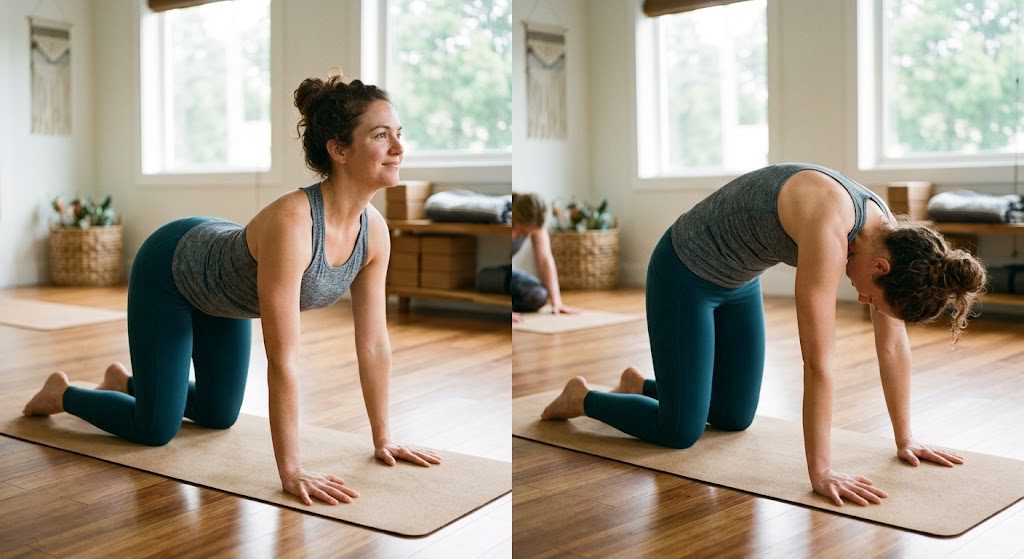
Cat-Cow
Marjaryasana–Bitilasana
HOW TO DO IT
- Start on hands and knees, wrists under shoulders, knees under hips.
- Inhale, let your belly drop and gently lift your chest and tailbone (Cow).
- Exhale, round your spine toward the ceiling and tuck your chin (Cat).
- Flow between the two with your breath, keeping the movement small and smooth.
WHY IT'S USEFUL
It gently moves the spine without load, a good first pose.
IF IT DOESN'T FEEL RIGHT
Sore wrists? Use your forearms. Sore knees? Pad them with a towel. Shrink the range until it feels easy.
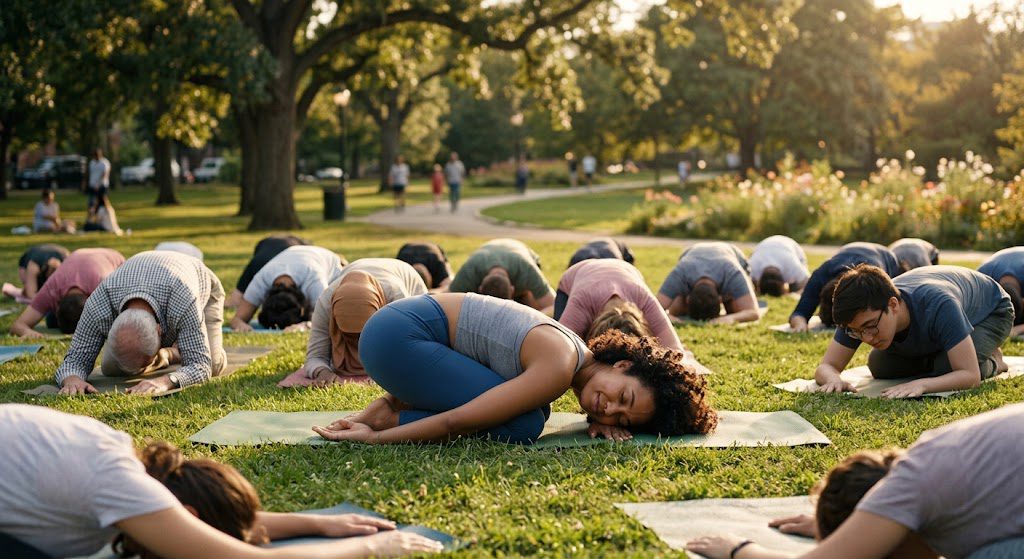
Child's Pose
Balasana
HOW TO DO IT
- From hands and knees, sit your hips back toward your heels with knees hip-width or wider.
- Rest your torso between or over your thighs and let your forehead lower toward the floor.
- Stretch your arms forward or rest them alongside your legs. Breathe into your lower back.
WHY IT'S USEFUL
It gives the lower back a long, supported stretch and is a good pause between active poses.
IF IT DOESN'T FEEL RIGHT
If your hips don't reach your heels, slide a pillow between your thighs and calves. If it bothers your knees, use Knee-to-Chest instead.
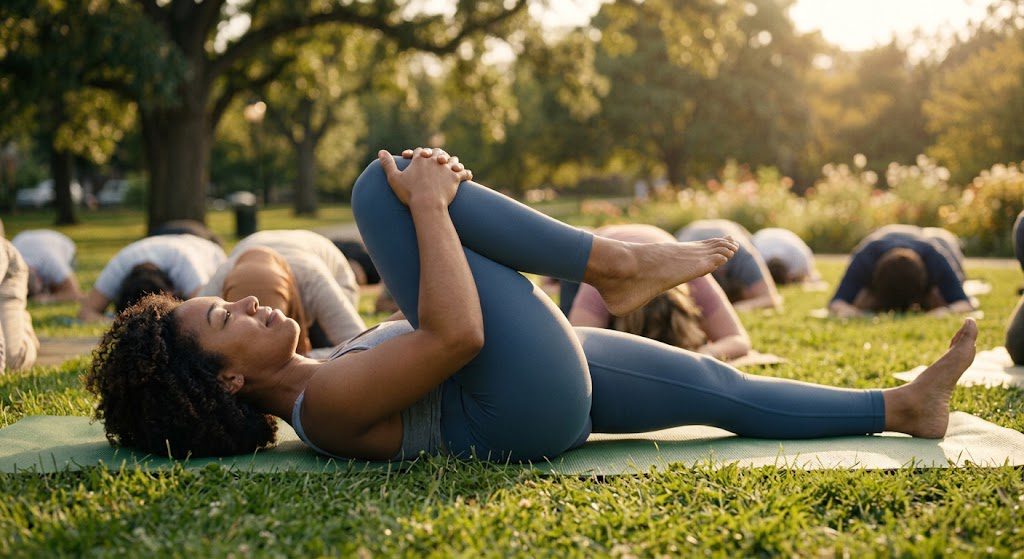
Knee-to-Chest
Apanasana
HOW TO DO IT
- Lie on your back with knees bent and feet flat.
- Hug one knee toward your chest, holding behind the thigh or shin. Keep the other foot on the floor or extend that leg.
- Hold, breathe, then switch. Finish by hugging both knees if that feels good.
WHY IT'S USEFUL
It eases tension through the low back and hips with your spine fully supported by the floor.
IF IT DOESN'T FEEL RIGHT
If both knees together is uncomfortable, stay with one leg at a time.
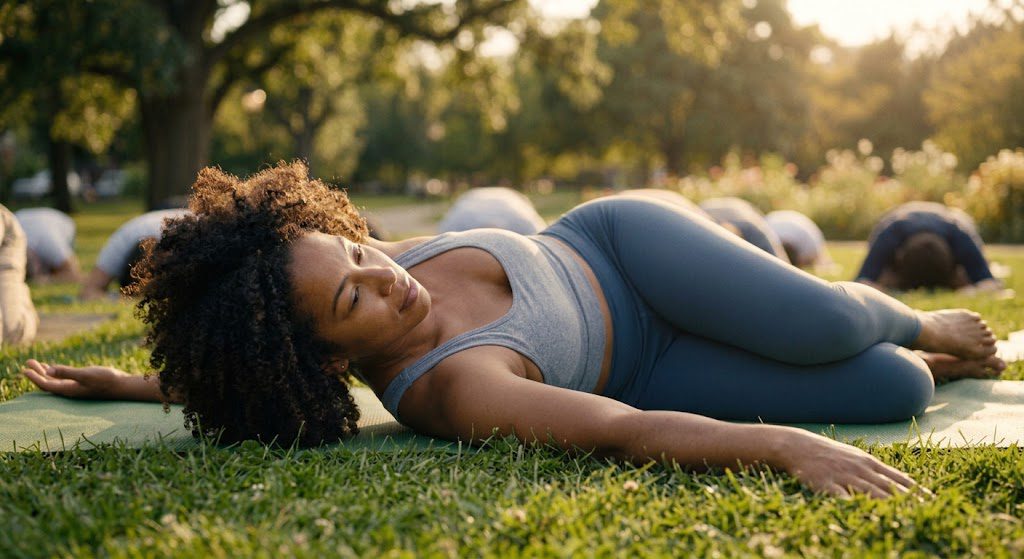
Reclined Spinal Twist
Supta Matsyendrasana
HOW TO DO IT
- Lie on your back, knees bent. Extend your arms out to the sides.
- Let both knees drop slowly to one side, ideally onto a pillow so nothing hangs in the air.
- Keep both shoulders heavy on the floor. Breathe, then return to center and switch sides.
WHY IT'S USEFUL
It offers a soft rotation through the spine without the leverage of a seated twist.
IF IT DOESN'T FEEL RIGHT
Keep the knees higher and don't chase the floor. If twisting reliably increases your pain, leave it out for now.
Bridge Pose
Setu Bandhasana
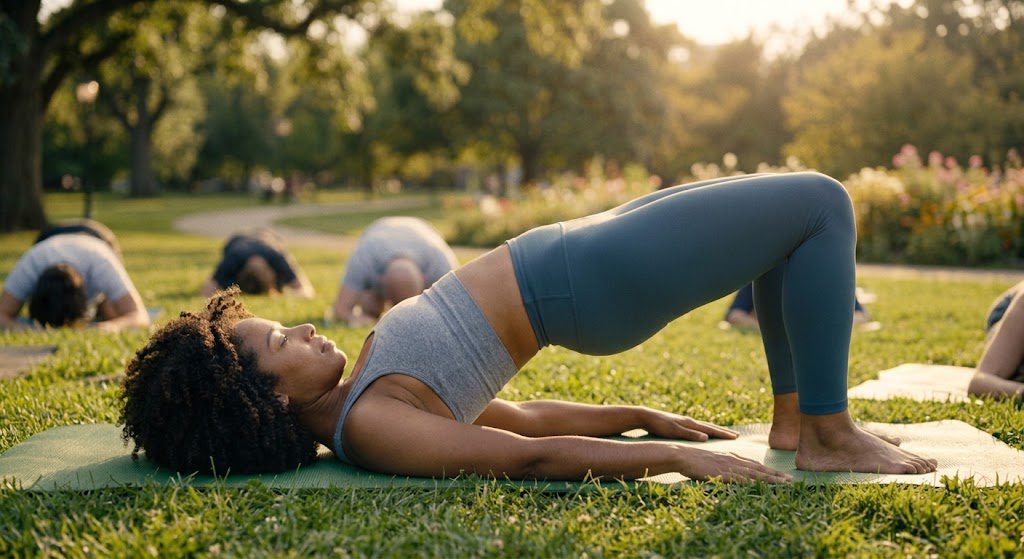
HOW TO DO IT
- Lie on your back, knees bent, feet flat and hip-width apart, heels a few inches from your hips.
- Press through your feet and lift your hips until your body forms a comfortable slope from shoulders to knees.
- Squeeze your glutes gently, keep your neck relaxed, hold, then lower one vertebra at a time.
WHY IT'S USEFUL
It builds the glutes and hamstrings, which share the work of supporting your back. It's the one strengthening pose here.
IF IT DOESN'T FEEL RIGHT
Lift only as high as you can without your lower back doing the work. If it pinches, lower the hips and press through your heels. Don't turn your head while lifted.
Sphinx Pose
Salamba Bhujangasana
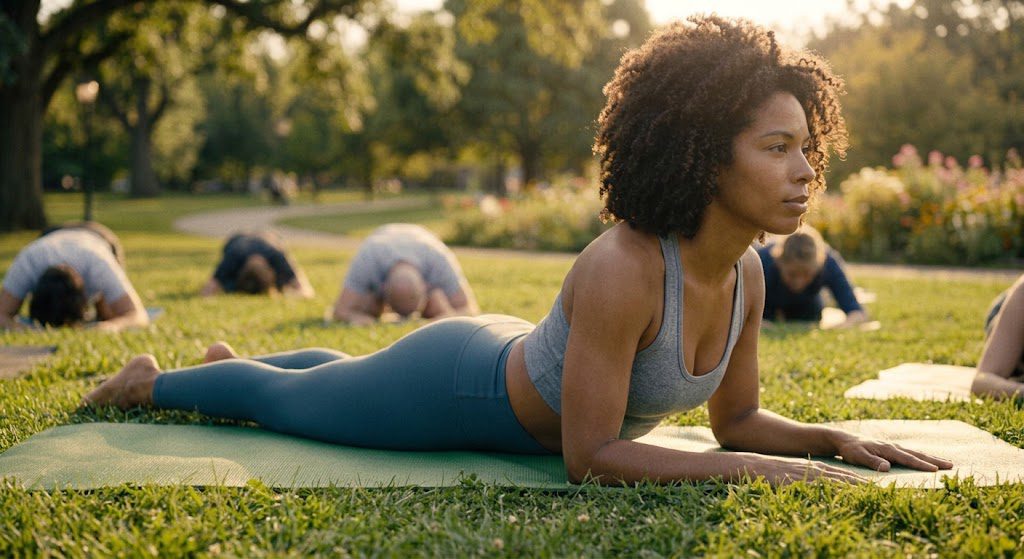
HOW TO DO IT
- Lie on your stomach with your elbows under your shoulders and forearms on the floor.
- Press your forearms down and lift your chest gently, keeping your hips and legs relaxed.
- Look forward, keep your neck long, and breathe evenly.
WHY IT'S USEFUL
It's a mild backbend that some people find eases stiffness after hours of sitting.
IF IT DOESN'T FEEL RIGHT
Some backs like arching; others don't. If it increases pain or sends it down a leg, skip it. Lower your chest to reduce the arch.
Downward-Facing Dog (Bent-Knee Version)
Adho Mukha Svanasana
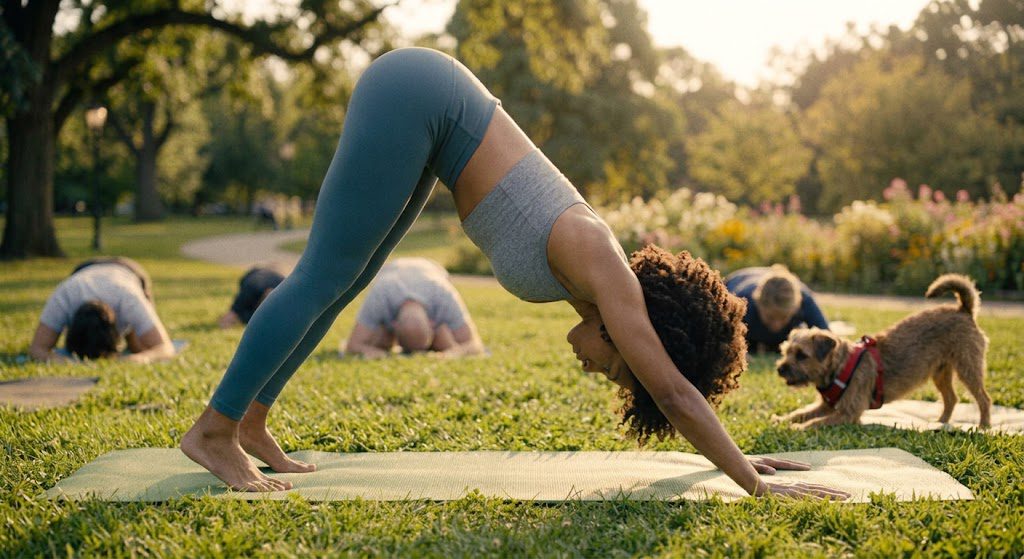
HOW TO DO IT
- From hands and knees, tuck your toes and lift your hips up and back.
- Keep your knees generously bent so your spine can stay long instead of rounding.
- Press the floor away, let your head hang loose, and take five slow breaths.
WHY IT'S USEFUL
It stretches tight hamstrings and calves, often part of a stiff lower back.
IF IT DOESN'T FEEL RIGHT
Place your hands on a wall or countertop and walk your feet back for a "standing dog" that removes weight from your wrists and back.
Reclined Figure-Four
Supta Kapotasana variation
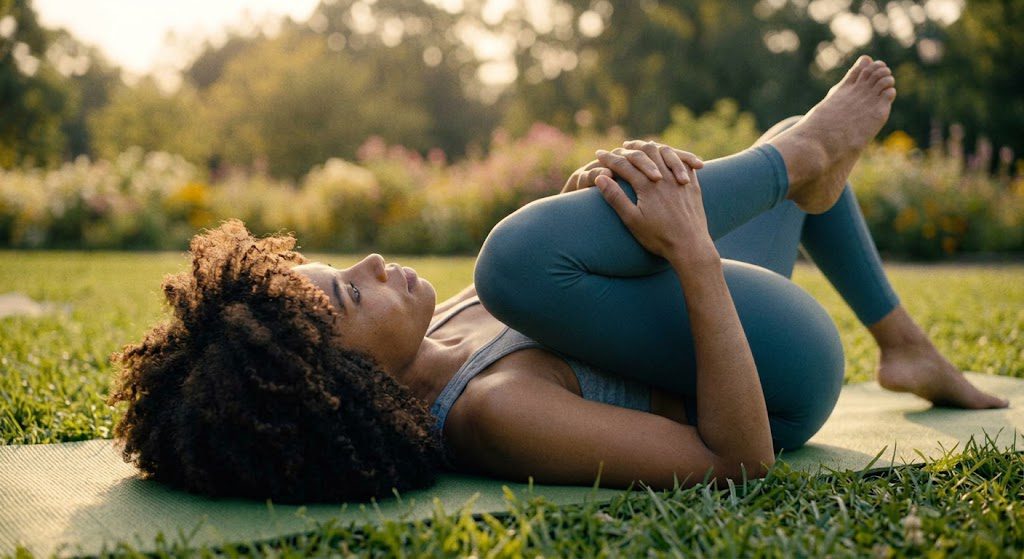
HOW TO DO IT
- Lie on your back, knees bent. Cross your right ankle over your left thigh, just above the knee.
- Draw your left thigh toward your chest, holding behind it, until you feel a stretch in your right hip or glute.
- Breathe, then switch sides.
WHY IT'S USEFUL
Stiff hips can leave the lower back doing extra work. This opens them while your back rests supported.
IF IT DOESN'T FEEL RIGHT
Feeling it in the knee? Flex the crossed foot and ease off. Keep the thigh farther from your chest for a milder version.
Legs Up the Wall
Viparita Karani
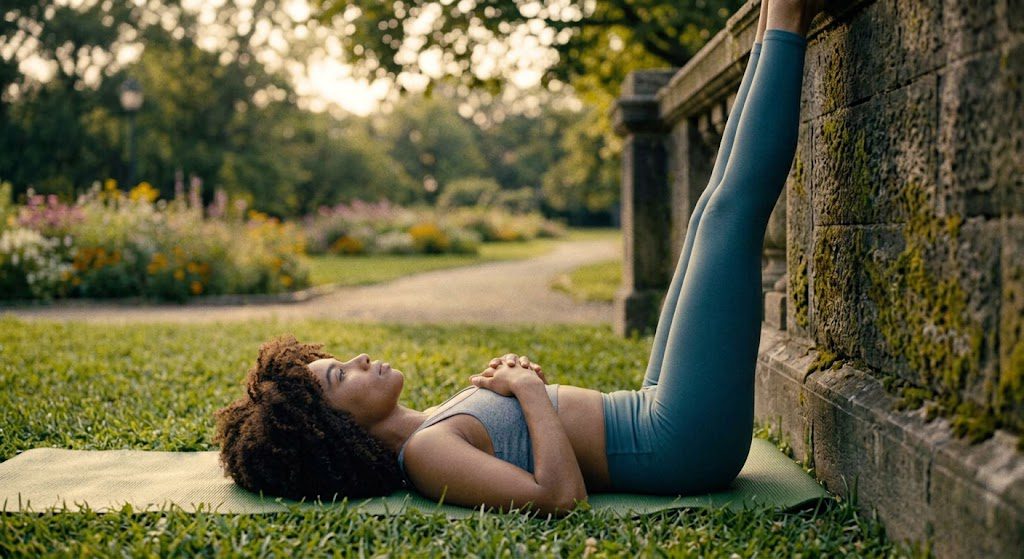
HOW TO DO IT
- Sit sideways next to a wall, then swing your legs up as you lie back.
- Scoot your hips as close to the wall as feels comfortable. Rest your arms at your sides.
- Stay for several minutes, breathing slowly, then bend your knees and roll to one side to come out.
WHY IT'S USEFUL
It takes load off the spine and lets nearby muscles release, a natural way to finish.
IF IT DOESN'T FEEL RIGHT
If hamstrings pull, move farther from the wall or bend your knees. If you have glaucoma or were advised to avoid inversions, skip it.
Poses to approach carefully during back pain: deep seated forward folds with a rounded spine, forceful or deep twists, full backbends like Wheel, and long unsupported holds. None are forbidden forever, but a sore back is not the time to test limits.
A 15-minute back-care routine
Put the poses together in this order, from gentle mobility to hip release, strength, then rest:
| Step | Pose | Time |
|---|---|---|
| 1 | Cat-Cow | 1½ min |
| 2 | Child's Pose | 1½ min |
| 3 | Knee-to-Chest | 1½ min |
| 4 | Reclined Spinal Twist | 2 min (both sides) |
| 5 | Bridge Pose | 2 min (3 rounds) |
| 6 | Sphinx Pose | 1 min |
| 7 | Reclined Figure-Four | 2 min (both sides) |
| 8 | Legs Up the Wall | 3 min |
Downward Dog is optional and easy to add between steps 2 and 3 if your hamstrings feel tight.
Aim for a few sessions a week rather than one heroic one. For a bell to time holds, our free meditation timer has an interval chime that works well for this.
Gear that makes these poses easier
You can begin with a towel and a pillow. If you keep going, these four props cover the poses above — each is a well-documented, currently listed Amazon product, checked against its own listing and cross-referenced buyer feedback rather than picked at random.
#1 bestseller in yoga mats
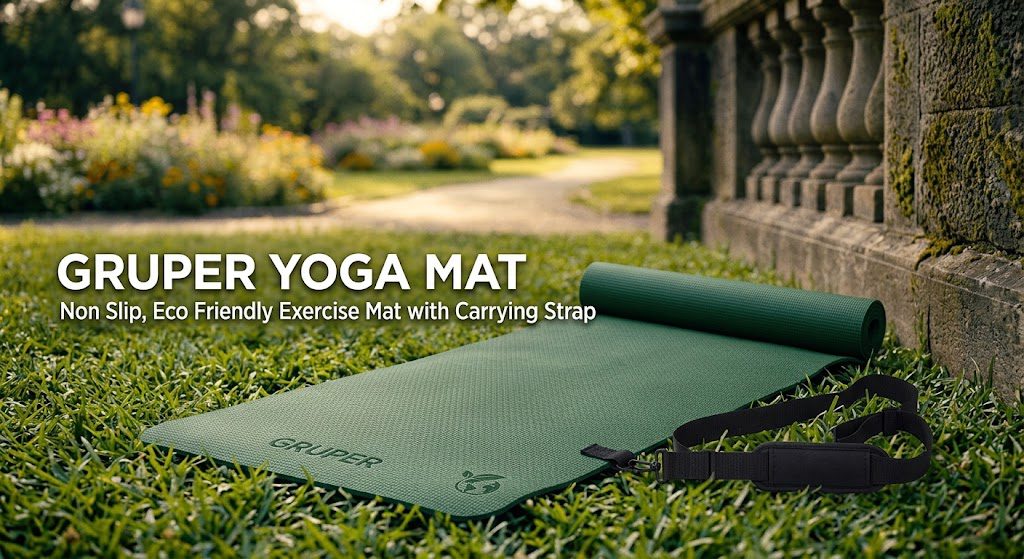
Amazon Basics Extra Thick Yoga Mat
Gruper Yoga Mat Non Slip, Eco Friendly Exercise Mat with Carrying Strap.
The extra thickness cushions your spine and knees on hard floors, especially during Cat-Cow, Sphinx, and Bridge.
Check current price →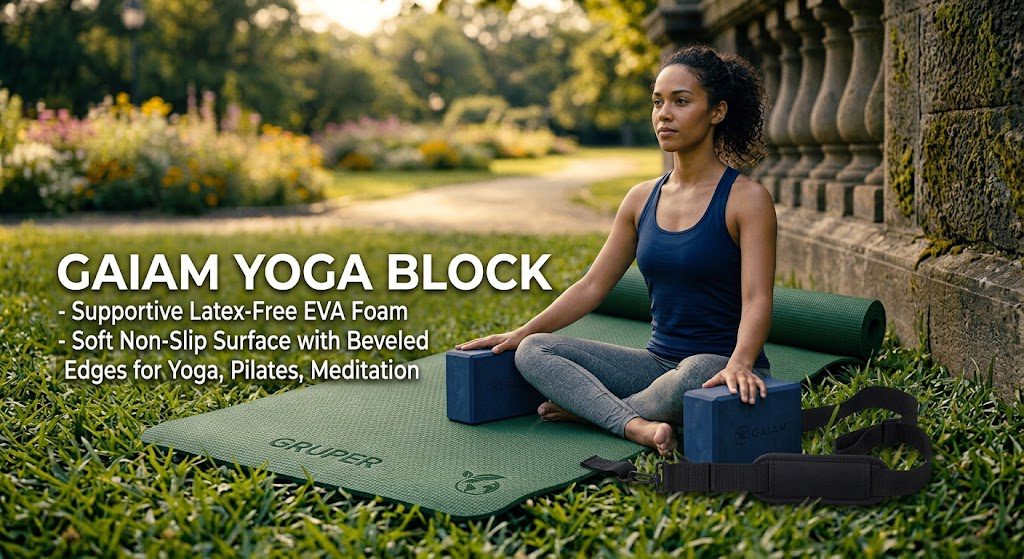
#1 in yoga blocks · ASIN B075W693J7
Gaiam Yoga Block
Gaiam Yoga Block - Supportive Latex-Free Eva Foam - Soft Non-Slip Surface with Beveled Edges for Yoga, Pilates, Meditation.
Brings the floor closer so you can support your hips in Bridge or your torso in Child's Pose without straining to reach.
Check current price →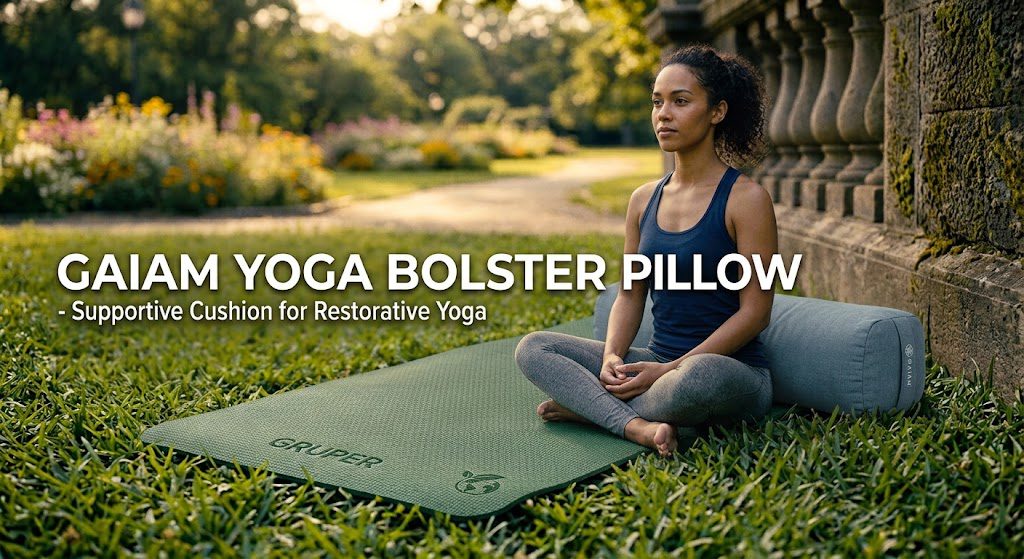
Rectangular, cotton fill
Gaiam Yoga Bolster Pillow
~25" × 12" cotton-batting cushion · machine-washable cover · built-in carry handle
Slide it under your knees in the Reclined Twist, or under your hips for a gentler Legs Up the Wall.
Check current price →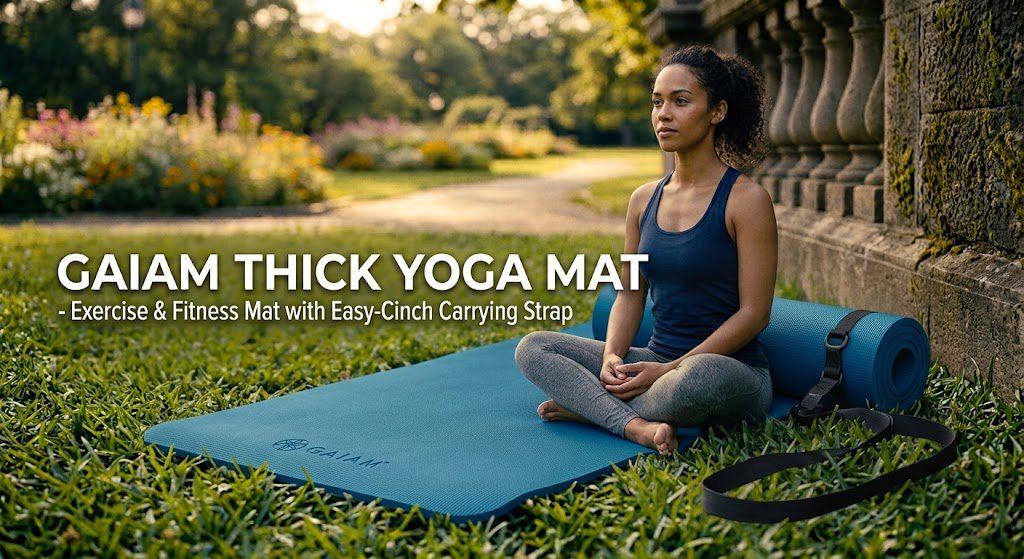
6ft · ASIN B00LY9O82M
Gaiam Yoga Strap
Gaiam Thick Yoga Mat, Exercise & Fitness Mat with Easy-Cinch Carrying Strap
Lets you hold your leg in Knee-to-Chest or Figure-Four without rounding forward to reach it.
Check current price →Prices, ratings, and availability are shown on Amazon at checkout — not fixed here, since they change often. Insert your own Amazon Associates link (via SiteStripe) in place of each "Check current price" button.
Important
This guide is general wellness information, not medical advice, and yoga is not a treatment for any medical condition. If your pain is severe, persistent, or comes with any warning sign above, speak with a doctor or physical therapist first. If you have a spinal condition, are pregnant, or are recovering from surgery, get individual guidance.
Want a calmer way to end the session? Try our 10-minute guided meditation, or set a bell with the free meditation timer for a few quiet minutes afterward.
Common questions
What are the best yoga poses for back pain?
Gentle, low-load poses are the usual starting point: Cat-Cow, Child's Pose, Knee-to-Chest, Reclined Spinal Twist, Bridge Pose, Sphinx Pose, a modified Downward-Facing Dog, Reclined Figure-Four, and Legs Up the Wall. The best pose for you is the one that eases your symptoms without producing sharp, radiating, or worsening pain.
Is yoga good for lower back pain?
For chronic non-specific low back pain, yoga is one of several movement options that clinical guidelines list as reasonable to try, and research suggests it can produce small improvements in pain and function compared with doing no exercise. The evidence is modest rather than dramatic, and yoga is not a substitute for medical evaluation when pain is severe, new, or accompanied by warning signs.
How long should I hold yoga poses for back pain?
Most gentle back-care poses are held for 30 seconds to two minutes, or for five to eight slow breaths. Passive poses like Legs Up the Wall can be held for three to five minutes. If a pose creates sharp pain, tingling, or numbness, come out of it slowly rather than trying to hold through it.
Which yoga poses should I avoid with back pain?
Approach deep forward folds with a rounded spine, forceful twists, full backbends such as Wheel, and long unsupported holds with caution, especially during a flare-up. Avoid any pose that reproduces sharp pain, pain that travels down the leg, or tingling, and ask a clinician or qualified instructor about modifications for your situation.
When should I see a doctor about back pain instead of doing yoga?
See a doctor promptly if back pain follows a fall or injury, comes with fever, unexplained weight loss, leg weakness, or numbness, or does not improve after a few weeks. Loss of bladder or bowel control, or numbness in the groin or inner thighs, needs urgent medical care, not stretching.