Mala beads buying guide
Count the beads before you buy — most "mala style" strands aren't actually 108
A mala's entire function is counting a mantra without losing your place. If the strand you're eyeing doesn't have 108 beads and real knotting between them, it's decorative — which is fine, as long as you know that going in.
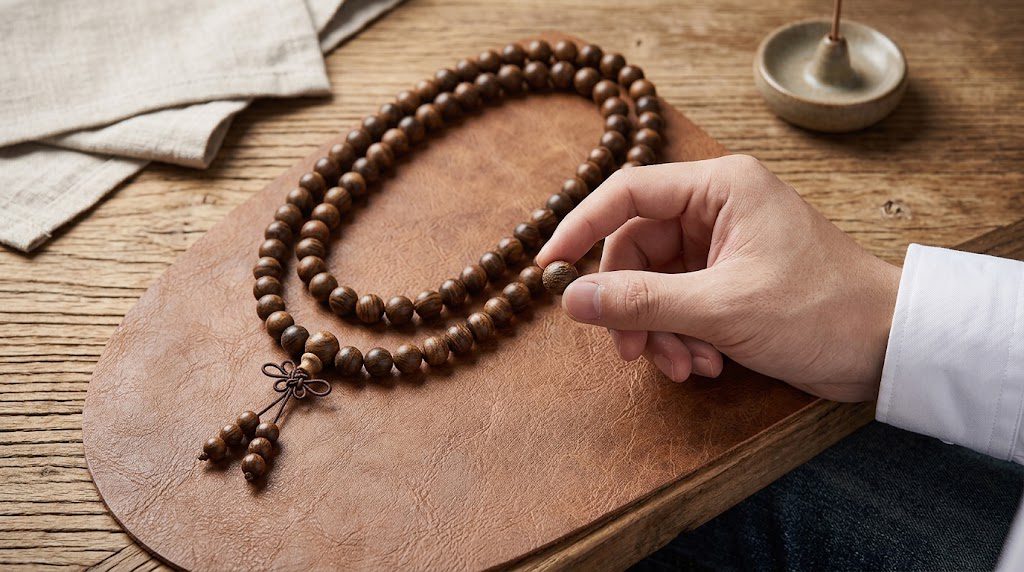
Search "mala beads" on Amazon and you'll get two very different products mixed into the same results: traditional 108-bead japa malas meant for mantra counting, and shorter decorative strands sold under the same name that are really just beaded jewelry. Neither is wrong to buy — but knowing which one you're getting matters if you actually plan to use it for counted recitation.
The three materials you'll actually see
Seed, ridged texture
Traditional in Hindu practice, rough natural surface, usually the priciest option. Often sold with a certificate of authenticity.
Wood, smooth & scented
Lightweight, smooth finish, mild natural fragrance that fades with use and handling over months.
Tumbled stone beads
Rose quartz, amethyst, and similar — heavier per bead, chosen more for appearance and material than tradition.
None of these materials is "more effective" for counting a mantra — the count and the knotting matter more than what the bead is made from. Material is mostly a question of feel, weight, and what you're drawn to.
Knotted vs. strung — the detail listings bury
Strung (no knots)
Beads sit flush together. One break sends the entire strand scattering at once.
Knotted between each bead
A small knot on either side of each bead. A break loses at most one or two beads, not the whole strand.
Knotted construction costs a little more but is worth it for anything you'll actually wear or use daily rather than display.
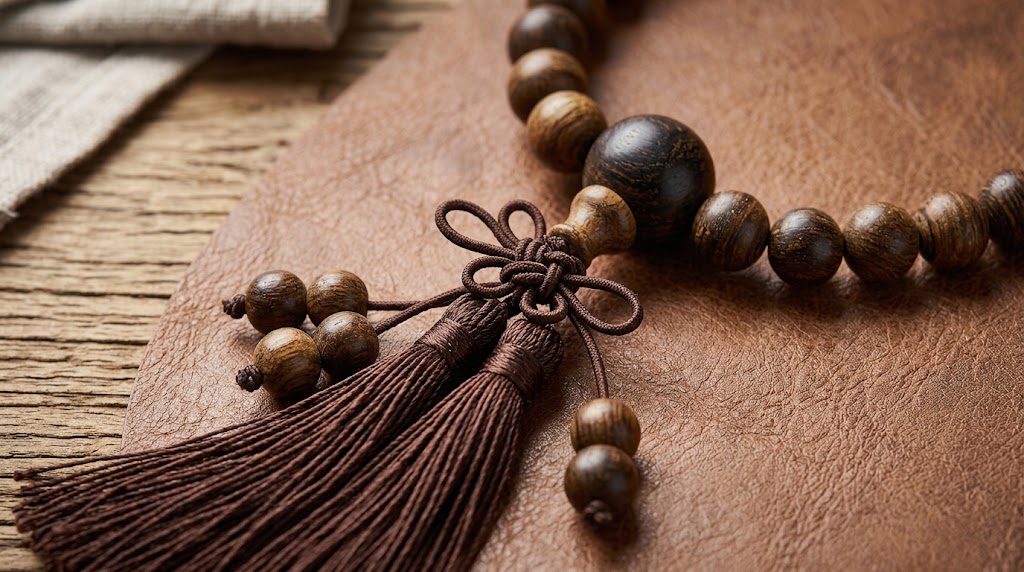
Worth checking before you buy: the listing photo of the guru bead (the larger 109th bead) and tassel. A missing guru bead usually means it's a decorative strand, not a traditional counting mala.
Quick picks, by material and use
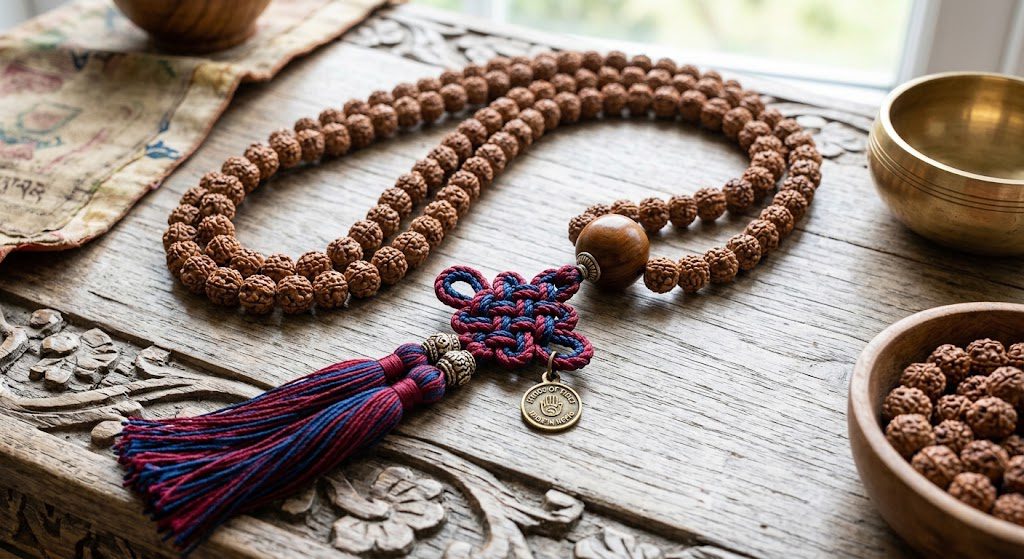
Best individually knotted
Hands Of Tibet Rudraksha Mala
Handmade, individually knotted · natural rudraksha · Nepal/Tibet sourced
Explicitly knotted construction from a seller with a long-standing handmade focus rather than mass production.
Check current price →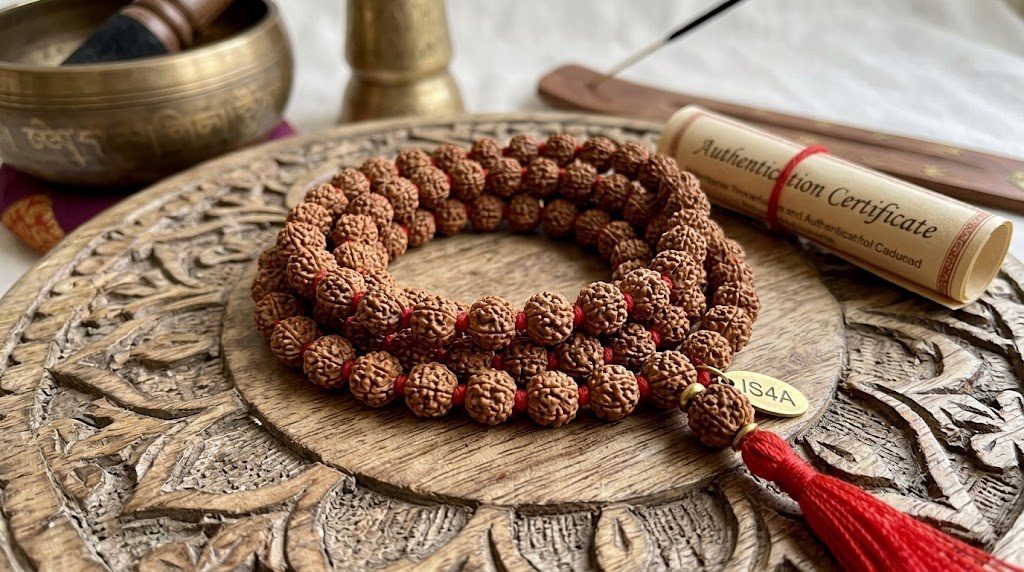
Best with authenticity certificate
IS4A Nepali Rudraksha Mala
5 Mukhi rudraksha · 108 beads, 8mm · includes certificate
The included certificate is useful documentation if authenticity concerns matter to you — check it's specific, not generic.
Check current price →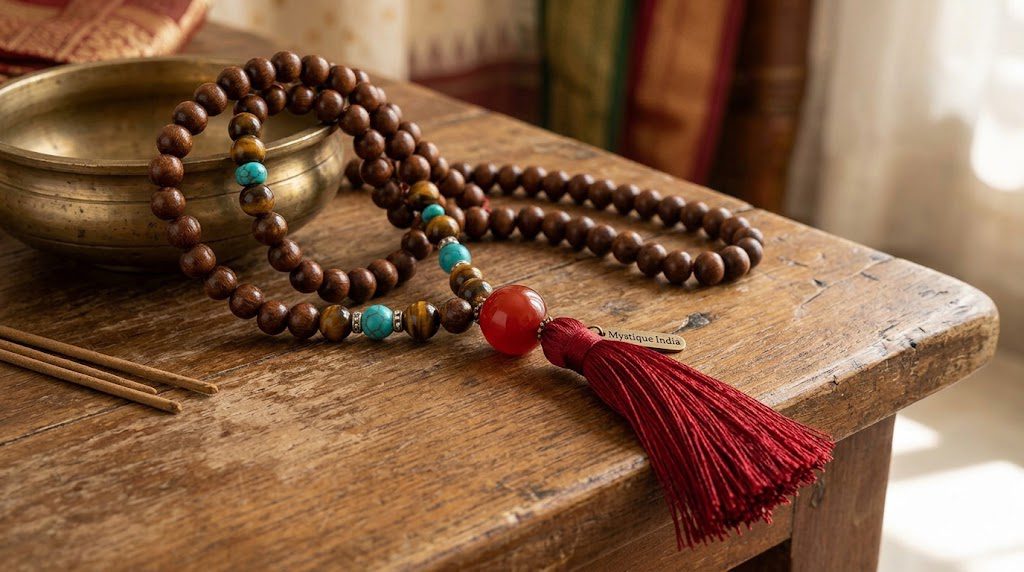
Best sandalwood option
Mystique India Rudraksha & Sandalwood Japa Mala
108+1 beads · 8mm · red knots and tassel
Combines the two most common traditional materials in one strand with a full guru-bead-and-tassel finish.
Check current price →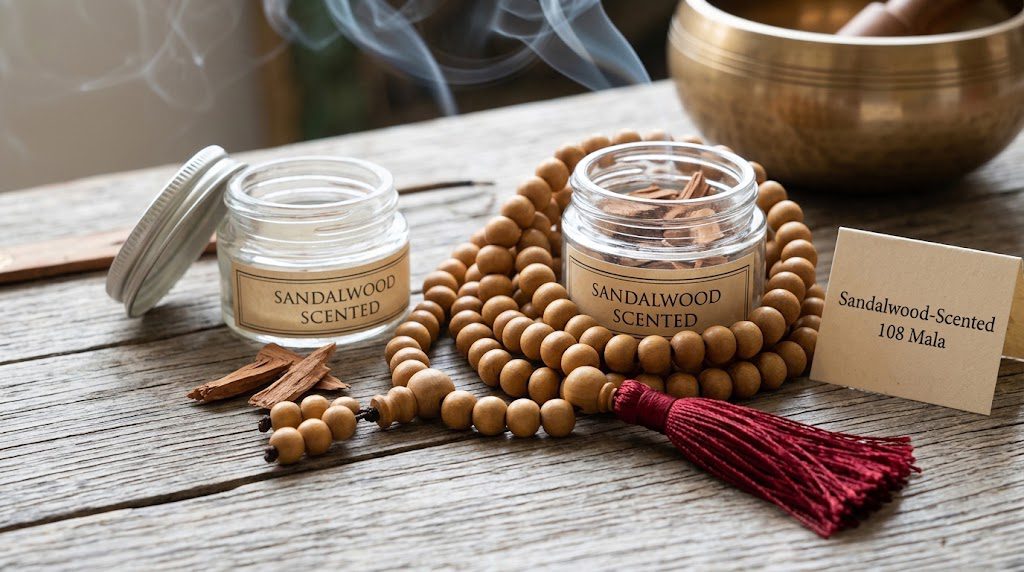
Best simple/budget pick
Sandalwood-Scented Mala, 108 Beads
8mm sandalwood beads · unadorned strand
No extra charms or tassel — a straightforward option if you just want a functional counting mala.
Check current price →Prices and availability shown on Amazon at checkout, not fixed here — they change often enough that a printed number would be wrong within weeks.
A note on "energy" and protective claims
Rudraksha and gemstone mala listings often describe protective, energetic, or healing properties. These are traditional and cultural beliefs, not claims backed by clinical research, and we're not presenting them as medical or scientific fact. We're covering malas here as meditation and mantra-counting tools.
Common questions
Why do mala beads have 108 beads?
108 is the traditional count used in Hindu and Buddhist mantra practice, where practitioners recite a mantra once per bead to complete a full cycle without losing count. Some malas also include a 109th larger bead, called the guru bead, which marks the start and end of the cycle and isn't counted during recitation.
Are knotted mala beads better than strung ones?
Knotted malas have a small knot tied between each bead, which prevents the whole strand from scattering if the string breaks and adds slight spacing that makes beads easier to count by feel. Strung malas without knots are more prone to a full break sending every bead across the floor at once.
What's the difference between rudraksha and sandalwood mala beads?
Rudraksha beads come from the dried seed of the rudraksha tree and have a naturally rough, ridged surface; they're traditional in Hindu practice and typically the more expensive material. Sandalwood beads are carved from sandalwood, are smooth and lightweight, and release a mild natural scent that fades gradually with use.