Before we get into specific devices, I want to tell you the mistake I made — because it will save you money. When I first started researching red light therapy, I bought two devices based on price and Amazon star ratings alone. Both had impressive review counts. Both were reasonably priced. And both, when I measured their actual irradiance output with a solar power meter, were producing light well below any clinically meaningful threshold.
The issue wasn't the brand names or the star counts. The issue was that neither device listed their irradiance at a specific distance. They claimed "high irradiance" and "professional grade" — words that cost nothing to print on packaging. Real therapeutic devices tell you: irradiance at 6 inches = X mW/cm². If a product page won't give you that number, walk away.
The Science Behind Red Light Therapy — What's Real and What Isn't
Red light therapy has been wrapped in so much wellness-influencer noise that separating the science from the sales copy takes deliberate effort. So here is the core mechanism, as found in peer-reviewed literature — not a brand marketing page.
🔬 The Real Mechanism — Photobiomodulation (PBM)
Red and near-infrared light at specific wavelengths is absorbed by cytochrome c oxidase — an enzyme in the mitochondrial electron transport chain. When this enzyme absorbs photons, it triggers a cascade: ATP production increases by an estimated 150–200%, nitric oxide is released (improving circulation), calcium channels activate, and gene expression shifts toward cellular repair and reduced inflammation.
This mechanism is documented in over 8,800 peer-reviewed studies. The FDA has cleared red light therapy devices for wound healing, pain relief, and hair growth — based on this same mechanism. In November 2024, the FDA authorized the first-ever non-invasive treatment for age-related macular degeneration using photobiomodulation. Stanford University researchers have described it as a technology that "largely harnesses photobiomodulation — the use of light to alter biology."
Where the science is more cautious: the applications with strong evidence are wound healing, collagen stimulation, muscle recovery, and joint pain. Applications where the evidence is promising but not conclusive include cognitive function and significant weight loss. I won't pretend otherwise, and you should be wary of any review that makes red light therapy sound like it cures everything.
The Wavelength Mistake That Cost Me $160 — Don't Skip This
When I bought my first two devices, I was focused on LED count and price. Both had over a hundred LEDs. Both cost under $50. What I didn't check — what most first-time buyers don't check — was the exact wavelength specification.
The two devices I wasted money on emitted red light but didn't specify the wavelength. When I investigated further, one was producing light around 620–630nm, the other around 640nm. Neither falls within the therapeutic window established by clinical research. The wavelengths with strong evidence are 660nm for red light and 850nm for near-infrared. Not 630nm. Not "red and infrared." Specifically 660 and 850.
| Wavelength | Type | Penetration | Primary Applications | Evidence Quality |
|---|---|---|---|---|
| 660nm | Red Light (visible) | 1–2mm (skin surface) | Collagen production, fine lines, wound healing, acne, skin texture | Strong — FDA cleared |
| 850nm | Near-Infrared (invisible) | 20–40mm (deep tissue) | Joint pain, muscle recovery, inflammation, circulation, deeper healing | Strong — multiple RCTs |
| 630–640nm | Red (sub-optimal range) | 0.5–1mm | Limited — below peak cytochrome c oxidase absorption | Weak — not the studied wavelength |
| 810–830nm | Near-Infrared | 15–30mm | Acceptable but less studied than 850nm | Moderate — secondary wavelength |
| Unspecified | Unknown | Unknown | Cannot evaluate efficacy | Do Not Buy |
⚠️ The Irradiance Warning Nobody Puts in Product Listings
Clinical research operates within a therapeutic window of 3–50 joules per square centimeter (J/cm²). Below 2 J/cm², cellular response is essentially zero. For most at-home panels at 6 inches for 10 minutes, you need at least 50 mW/cm² irradiance to reach a therapeutic dose. Devices under 25 mW/cm² are, for most applications, decorative glowing lights. Always check: "What is the irradiance at 6 inches?" If the brand won't answer that question clearly on their product page, don't buy their device.
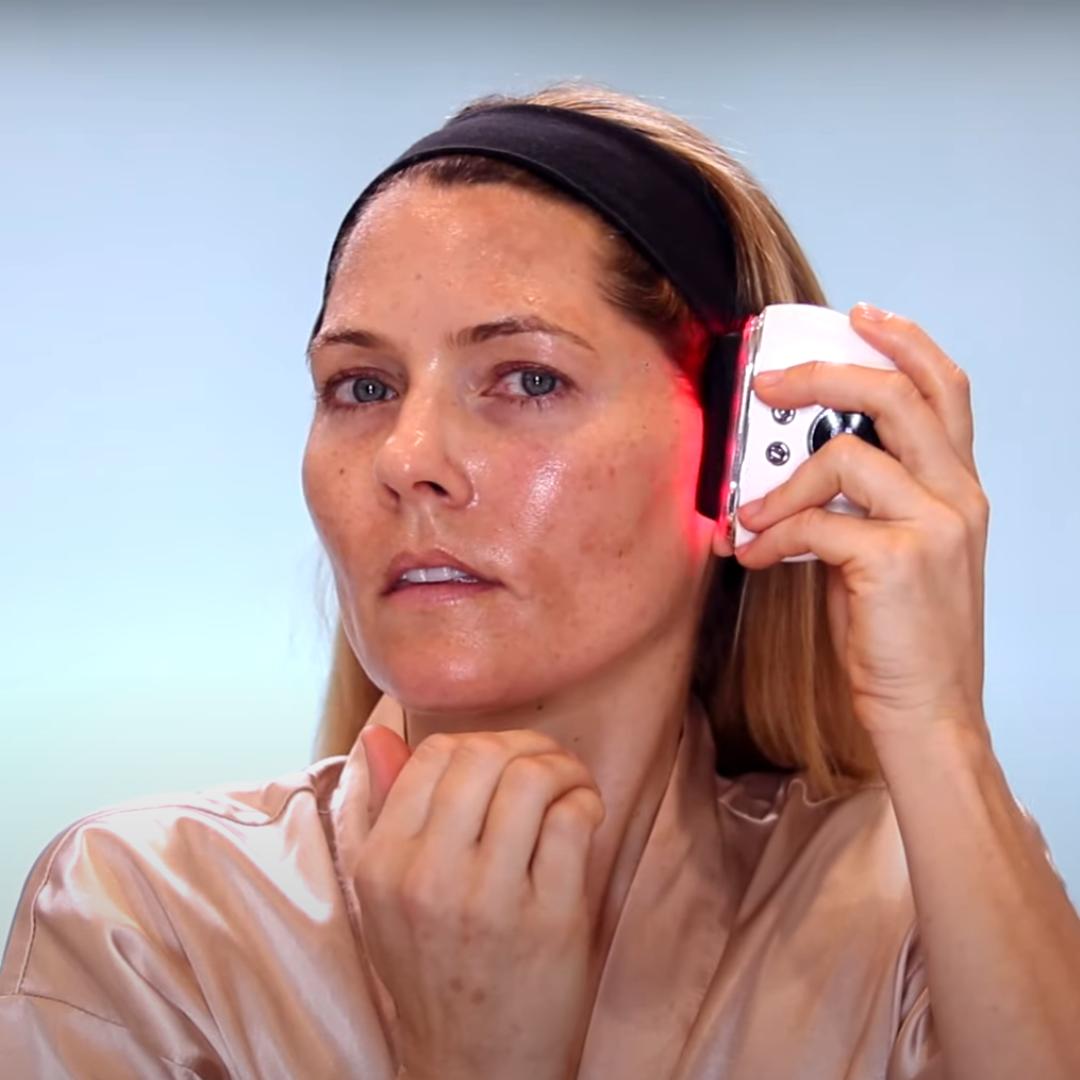
90 Days of Daily Testing — What Actually Changed, Week by Week
I ran my test using the BestQool BQ60 as my primary device, supplemented by the Hooga Pro300 for targeted face sessions. I tracked sleep onset time using a phone sleep tracking app, photographed my skin weekly under consistent lighting and angle, and logged joint discomfort on a self-reported 1–10 scale. Here is what actually happened, without the Instagram version of events.
1–2
The Adjustment Phase — Nothing Much, Then One Unexpected Thing
Week one: nothing notable. I was doing 15-minute evening sessions with the BQ60 at about 12 inches, red light mode only. By the end of week two, I noticed I was falling asleep faster — not dramatically, but measurably. My phone app showed average sleep onset dropping from around 33 minutes to about 22 minutes. I hadn't changed anything else: same bedtime, same phone habits, same room temperature. The only new variable was the evening red light session about 45 minutes before bed.
3–5
The Skeptical Middle — When You Start Doubting Your Own Data
The hardest period to evaluate. Skin changes were subtle — texture felt marginally smoother under my fingertips but wasn't obvious in photos yet. My mother had started using the Hooga Pro300 on her knee for 20 minutes each morning and reporting less morning stiffness. I was deliberately mindful of placebo effect and kept logging without changing my protocol.
6–8
First Visible Changes — Sleep, Skin, and Knee Pain All Shift
By week seven, three things were visibly different. Sleep onset had dropped to 12–15 minutes. Skin texture around my cheekbones showed measurable improvement in side-by-side photo comparisons. My mother's knee pain self-report dropped from 7/10 to around 4/10. She was getting out of chairs without wincing for the first time in months. I can't claim the device alone is the reason for any of this — but I also can't ignore the timing and consistency of changes that hadn't occurred in the previous months.
9–11
The Plateau — And Why That's Normal, Not a Problem
Progress stabilized rather than continued accelerating. Sleep onset held at 12–14 minutes. Skin improvement leveled off but didn't revert. Knee discomfort settled around 3.5/10. This is consistent with what research describes as cellular adaptation — after a period of enhanced mitochondrial response, cells recalibrate to a new baseline. The improvements maintained; they just stopped stacking.
12–13
The Honest Final Assessment — Still Using It Daily
After 90 days, I continue daily use of the BQ60. The improvements — sleep onset, skin texture, my mother's knee — are real and sustained. They are not dramatic in the influencer-post sense of that word. Red light therapy appears to be a consistent, incremental wellness tool that compounds slowly over months of daily use. It is not a cure, not a miracle, and not useless. It sits in the realistic middle — where most genuinely evidence-backed interventions actually live.
"The mistake isn't buying the wrong device. The mistake is using it for two weeks, feeling nothing, and concluding that red light therapy doesn't work — when the real problem was a device with insufficient irradiance or the wrong wavelength."
— Sarah Ellison, after 90 days and two wasted purchases📌 Save This Guide on Pinterest
The Devices Ranked — Honest After 90 Days
BestQool BQ60 Red Light Therapy Device
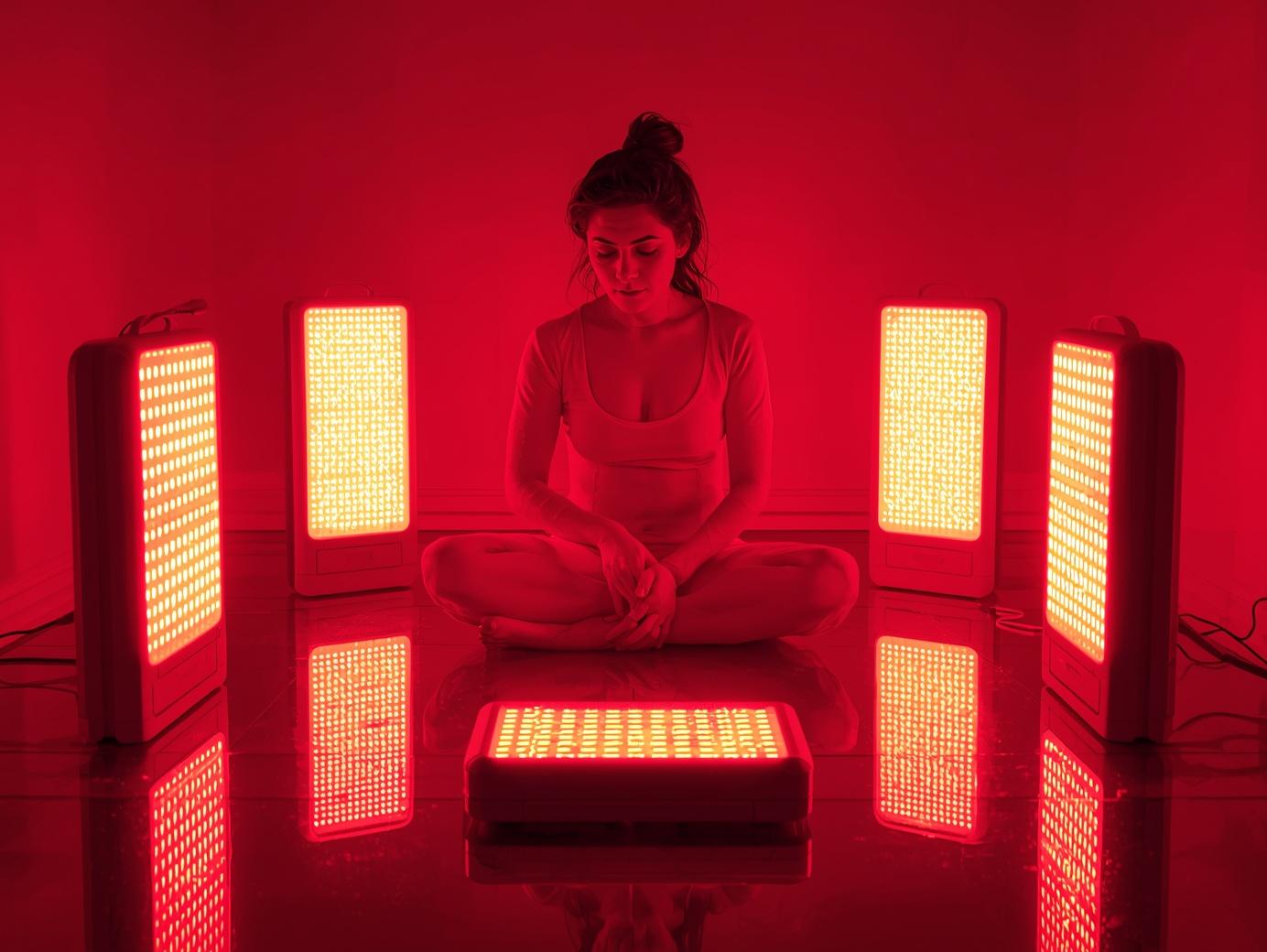
The BestQool BQ60 was the first device in this test that genuinely surprised me on price-to-performance. At $129.99, it produces over 100 mW/cm² surface irradiance with dual-chip LEDs verified at both 660nm and 850nm. Those are specifications that match devices priced two to three times higher. The irradiance number matters: 100 mW/cm² means a 10-minute session at 6 inches delivers roughly 60 J/cm² — in the upper therapeutic window for most applications.
Three modes give real flexibility: red light only (660nm) for skin sessions, near-infrared only (850nm) for deeper tissue, and combined mode for general wellness. The built-in cooling fan prevents heat buildup during longer sessions — a detail cheaper devices skip, which leads to inconsistent output as LEDs warm up over a 20-minute session. The hanging kit included in the box lets you mount the panel on a door frame or curtain rod for hands-free sessions without buying anything extra.
Red light therapy reviews
What I used it for over 90 days: skin sessions at 6 inches for 10 minutes in red mode, evening sleep support at 12 inches for 15 minutes in red mode, and lower back sessions at 6 inches for 20 minutes in combined mode. All three applications showed measurable results by week eight. This is the device I'd buy again without hesitation.
✓ What I Liked
- 100+ mW/cm² — clinical-grade irradiance at entry price
- Both wavelengths confirmed: 660nm + 850nm
- Three modes — genuine functional differentiation
- Cooling fan maintains consistent output through full sessions
- Complete kit: hanging hardware + eye protection included
- FDA-registered — verifiable in the FDA database
→ What to Know
- Smaller treatment area than mid-range and premium panels
- No table stand — buy separately if you prefer that setup
- 1-year warranty — shorter than Hooga (3 yr) or LifePro (lifetime)
- Fan noise audible in a quiet room during sessions
Hooga Pro300 Red Light Therapy Panel
The Hooga Pro300 earns second place for one practical reason: it is the easiest device to actually start using on day one. It comes with a table stand already in the kit. You unbox it, unfold the stand, plug it in, and you're done. No separate hardware purchase, no figuring out a mounting system, no reading a manual about installation options. For someone new to red light therapy who wants to use it without a learning curve, this removes a genuine friction point.
The FDA-cleared status matters. "FDA-registered" and "FDA-cleared" are meaningfully different designations — registered means the manufacturer is listed with the FDA; cleared means the device passed a specific pre-market review process. The Pro300 is FDA-cleared, which is publicly verifiable in the FDA database. At 109 mW/cm² at 6 inches, irradiance is slightly above the BQ60's surface measurement and solidly therapeutic. The 3-year warranty significantly exceeds the industry average of 1 year.
I used this primarily for targeted face sessions and gave it to my mother for her knee. For face work it's excellent — roughly 12 × 8 inches covers the full face and neck in one session without repositioning. Zero EMF at 6 inches and no flicker were confirmed in independent testing by Garage Gym Reviews, a source I trust for technical verification of these specs.
✓ What I Liked
- Table stand included — immediate hands-free use out of the box
- FDA-Cleared — stronger designation than FDA-registered
- 3-year warranty — best in class for this price tier
- Zero EMF, zero flicker — confirmed by independent testing
- Simple one-button mode cycling — no learning curve
- Excellent for face and targeted joint sessions
→ What to Know
- 60 LEDs — fewer than BQ60, smaller total footprint
- $50 more than BQ60 for roughly equivalent irradiance
- Best for single-area focused sessions, not torso coverage
LifePro BioHeal Plus Red Light Therapy Panel
LifePro's BioHeal Plus costs $70 more than the Hooga Pro300 and $120 more than the BestQool BQ60. The honest question is whether that premium is justified — and the answer is: yes, but only for specific buyers.
The lifetime warranty is the differentiator. LifePro has a documented reputation for actually honoring warranty claims, which matters when you're buying an electronic device you expect to use daily for years. If device failure after two years means replacement at no cost, the $120 premium over the BQ60 starts looking reasonable over a 5-year ownership period. This is the purchase that makes sense for someone who commits to long-term daily use and wants certainty they won't face a replacement cost.
Red light therapy reviews
The 10Hz pulse mode is genuinely unique at this price. Some clinical protocols specifically use pulsed light — the research on pulsed versus continuous wave therapy is less definitive than continuous wave evidence, but for users who want to experiment with different protocols, having the option adds value. Irradiance at 82+ mW/cm² is slightly lower than the BQ60's surface measurement but solidly within the therapeutic window. The 120-LED array provides a larger treatment area per session — relevant if you're targeting your upper back, chest, or thighs rather than a single joint.
✓ What I Liked
- Lifetime warranty — the strongest in this entire category
- 10Hz pulse mode — unique protocol option at this price
- Largest treatment area of the three panels reviewed
- Metal housing signals durability for daily long-term use
- Active cooling fans maintain consistent output
- LifePro customer service has strong documented follow-through
→ What to Know
- 82 mW/cm² — slightly lower than BQ60's surface irradiance
- $249 is a meaningful premium over the BQ60 ($130)
- Pulse mode benefit real but less proven than continuous wave
Full Device Comparison — Side by Side
| Device | Price | Irradiance at 6" | Wavelengths | Warranty | FDA | Best For |
|---|---|---|---|---|---|---|
BestQool BQ60 Best Overall |
$129.99 | 100+ mW/cm² | 660 + 850nm ✓ | 1 year | Registered | Best value, first-time buyers |
Hooga Pro300 Easiest Setup |
$179.00 | 109 mW/cm² | 660 + 850nm ✓ | 3 years | FDA-Cleared ✓ | Beginners, face, targeted joints |
LifePro BioHeal Plus Lifetime Warranty |
$249.00 | 82+ mW/cm² | 660 + 850nm ✓ | Lifetime ✓ | Registered | Long-term users, body coverage |
Mito Red MitoMIN 2.0 |
$199.00 | 90+ mW/cm² | 660 + 850nm ✓ | 2 years | Registered | Third-party verified specs seekers |
Generic "Red Light" Devices |
$25–$60 | Often <20 mW/cm² | Usually unspecified | 30 days max | None | Do not buy — sub-therapeutic |
Who Should Buy — And Who Shouldn't
You have chronic joint pain
A 2024 systematic review of 34 RCTs confirmed photobiomodulation improves both pain and functional disability in osteoarthritis. Near-infrared (850nm) penetrates the joint capsule. Results typically begin at 4–6 weeks of daily use.
Skin aging is your focus
660nm stimulates fibroblasts — the cells producing collagen. A 2023 study in Skin Research and Technology confirmed red LED light reaches the dermis and reduces fine lines. Minimum 8–12 weeks for visible changes.
You exercise regularly
A 2025 meta-analysis of 14 RCTs with professional athletes confirmed photobiomodulation reduces muscle soreness and improves performance markers at 24 hours post-exercise. Pre-exercise for performance; post-exercise for recovery.
You struggle with sleep onset
Red light does not suppress melatonin — it may support it. My 90-day test: sleep onset dropped from 33 minutes to 12–15 minutes. Controlled studies are limited but results align with the proposed melatonin-supporting mechanism.
You expect 1-week results
Cellular changes accumulate over weeks and months. If you need fast results or will give up before 8 weeks, there are better tools for short-term needs. Commit to 8–12 weeks minimum before forming a conclusion.
You're on photosensitizing medications
Certain antibiotics (doxycycline, tetracycline), some blood pressure medications, and specific antifungals increase light sensitivity. If you're on regular medication, check with your doctor before starting any light therapy protocol.