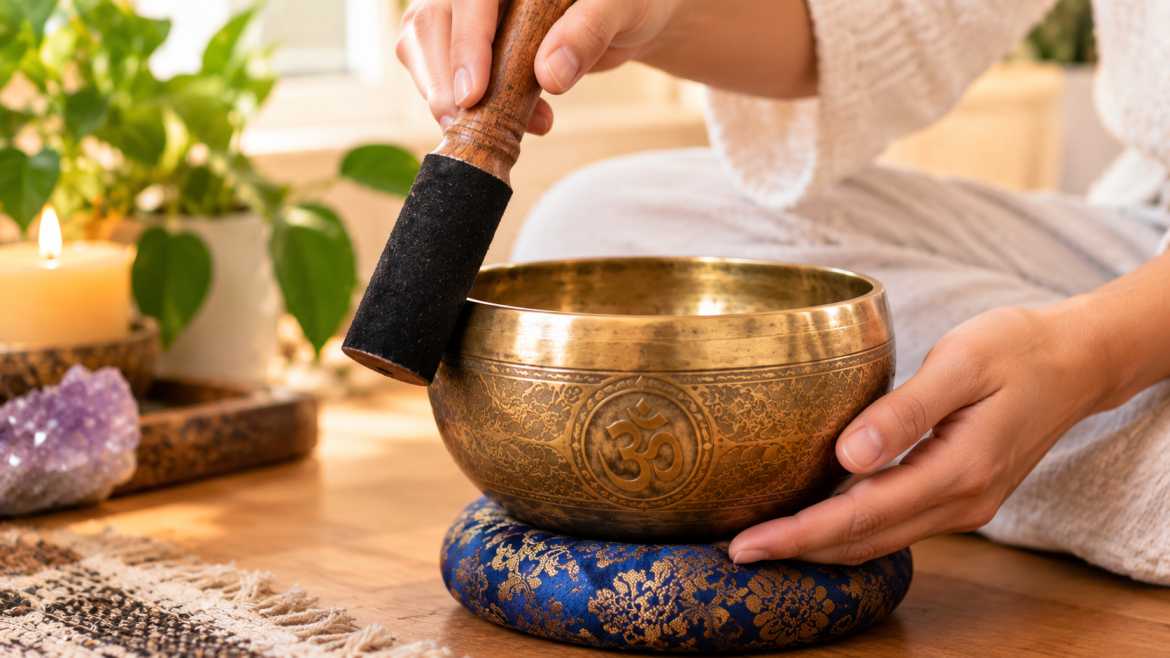
Side-by-side comparison
| Singing bowl | Tuning fork | |
|---|---|---|
| Sound | Rich and layered, with overtones and a slow pulsing wobble | Near-pure single tone that fades fast |
| Sustain | Long when played well (rim-circling extends it) | Short. Re-strike for each tone |
| How you use it | Strike it, or circle the rim, then listen | Strike on a rubber surface, hold near the ear or against the body (weighted types) |
| Learning curve | Moderate. Rim-circling takes practice | Very low. Strike and hold |
| Portability | Bulky and heavy, needs a cushion or stand | Fits in a pocket |
| Room impact | Fills the room and can carry through walls | Quiet and personal |
| Durability | Robust metal, but cheap bowls can chip or lose tone | Must not be struck on hard surfaces, which can damage or detune it |
| Research | Several small studies on mood and relaxation | Clinical use as a diagnostic tool, little credible evidence for "healing" use |
| Cost level | Moderate to high for a quality piece | Low to moderate |
| Best for | Seated meditation, sound baths, rituals | Small spaces, travel, short grounding sessions |
How they actually work
A singing bowl is a metal bowl that vibrates when struck or rubbed on the rim. It produces a complex sound made of many frequencies at once. Slight irregularities in the bowl create the slow pulsing wobble people find hypnotic, which is why bowls feel immersive.
A tuning fork is a two-pronged steel or aluminum tool that vibrates at one specific frequency. The sound is simpler and cleaner. Weighted forks (common at 128 Hz) are made to press against the body so you feel the vibration. Unweighted forks are usually held near the ear.
This one difference decides most buying choices. The bowl gives you sound as an environment. The fork gives you sound as a precise, personal tool.
What the research says
Singing bowls
Promising, early-stageA 2017 observational study of 62 participants found significantly lower tension, anger, fatigue and depressed mood after a Tibetan singing bowl meditation. People new to this kind of meditation saw a bigger drop in tension than experienced participants.
The limit: there was no control group, so it cannot prove the bowls caused the change rather than simply sitting quietly. A separate comparison reported that both bowls and silent rest helped, with the bowl group showing deeper, more consistent relaxation.
Tuning forks
Strong as a medical tool, weak as a "healer"The best-established medical use is diagnostic. A graduated tuning fork was tested as a simple, reliable way to measure vibration sensation in diabetic patients at risk of nerve damage.
On the wellness side, one method called Biofield Tuning has a registered randomized trial for anxiety, but its own practitioners describe it as a non-medical practice. Treat it as unproven.
Which is easier for beginners?
The tuning fork is easier. Strike it on a rubber puck or your knee, hold it, and listen. There is almost nothing to get wrong.
The singing bowl takes more practice. Striking is simple, but rim-circling for a continuous tone usually takes several tries. Beginners often assume a bowl is broken when the issue is technique.
Space, noise and lifestyle
| Apartment or shared walls | Tuning fork. A bowl's sustained tone travels. |
|---|---|
| Dedicated meditation corner | Singing bowl. It adds sound and ritual. |
| Travel or office | Tuning fork. Only realistic option. |
| Group or guided sessions | Singing bowl. The sound fills the space. |
Buying checklist
Singing bowl
- Weight and wall thickness. Very light, thin bowls often sound shallow and fade quickly.
- Hand-hammered vs machine-made. Hand-hammered bowls usually have richer overtones. Machine-made ones are cheaper and more uniform.
- Mallet and cushion. A suede mallet and a cushion matter more than bags or boxes.
- "Seven sacred metals." A common sales line that sellers rarely back with verified composition.
- Origin claims. The history of these bowls is partly debated. Be skeptical of confident "authentic ancient Tibetan" wording.
Tuning fork
- Weighted vs unweighted. Weighted forks are made for body contact. Unweighted ones are for use near the ear.
- Material. Aluminum is lighter and common for healing-style forks.
- A striker included. A rubber or silicone striking surface protects the fork.
- "Medical-grade." There is no consumer certification that makes a fork a medical device.
- Frequency hype. Ignore "DNA repair" and "miracle frequency" marketing.
Top picks
These are popular, well-reviewed options in each category on Amazon. Check the current listing for size, what is included, and today's price.
Himalayan Bazaar Premium Tibetan Singing Bowl Set
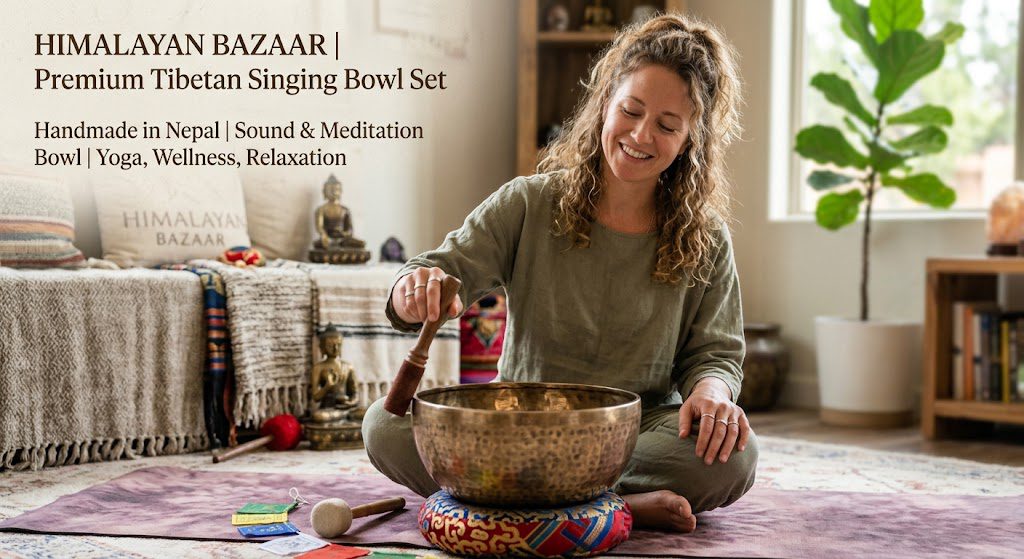
A handmade-in-Nepal set that has carried Amazon's Best Seller label in the singing bowl category. A sensible first bowl if you want a popular, proven listing.
Trade-off: sets at this level are usually small, so expect a higher, shorter tone than a large bowl. Check the size in the listing.
Check on AmazonSilent Mind Tibetan Singing Bowl Set
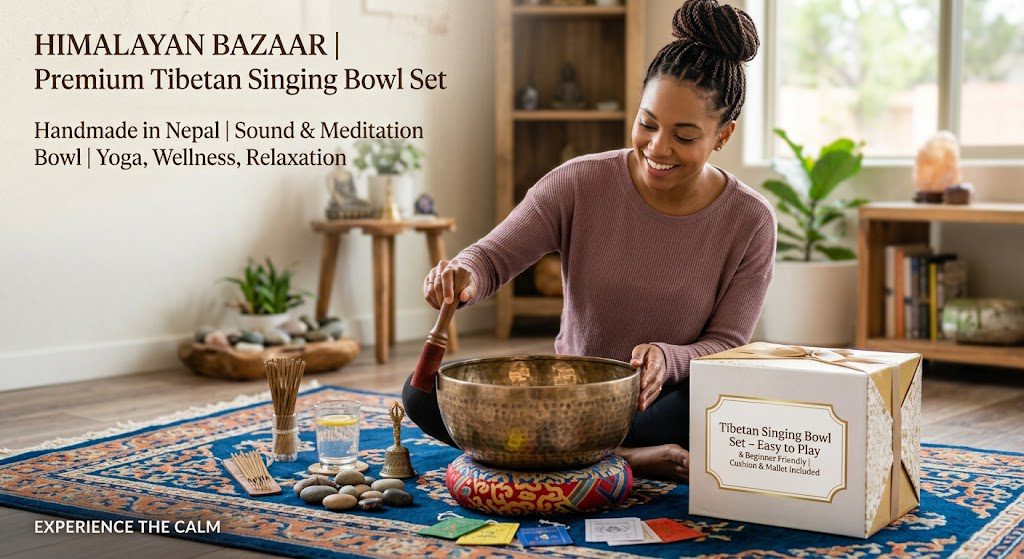
Aimed at beginners. The listing includes a cushion and a mallet, so you can start playing right away, and it ranks among the top few sellers in singing bowls.
Trade-off: compact size (about 4 inches per the listing), so it suits personal meditation more than a large room.
Check on AmazonOtto 128 Weighted Tuning Fork (Biosonics)
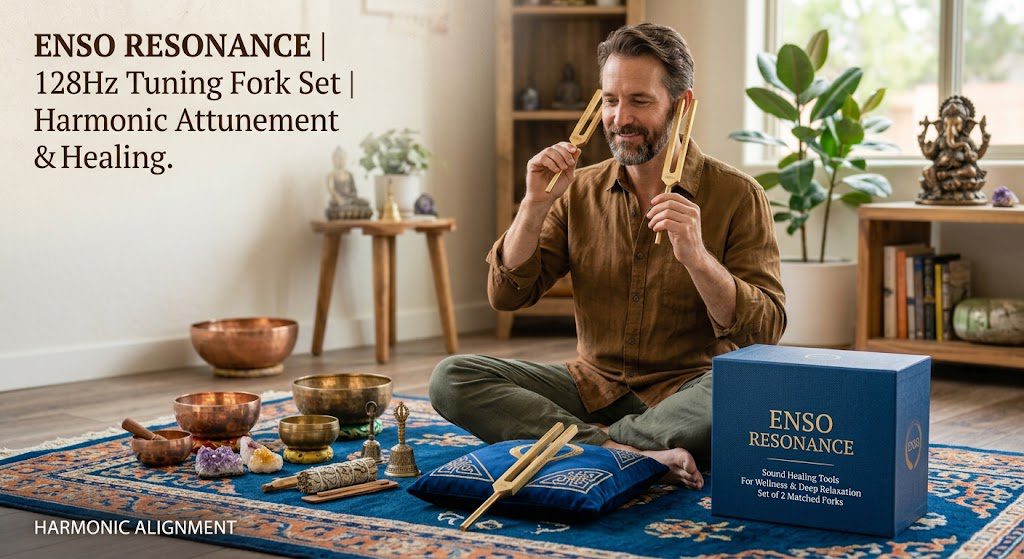
A weighted 128 Hz aluminum fork made in the USA, and one of the better-known names among body-contact forks. A good pick if you want a recognizable brand over a generic listing.
Trade-off: aluminum is soft, so small marks can appear with use. Ignore any health claims in the listing title.
Check on AmazonCashBeat 128 Hz Weighted Tuning Fork
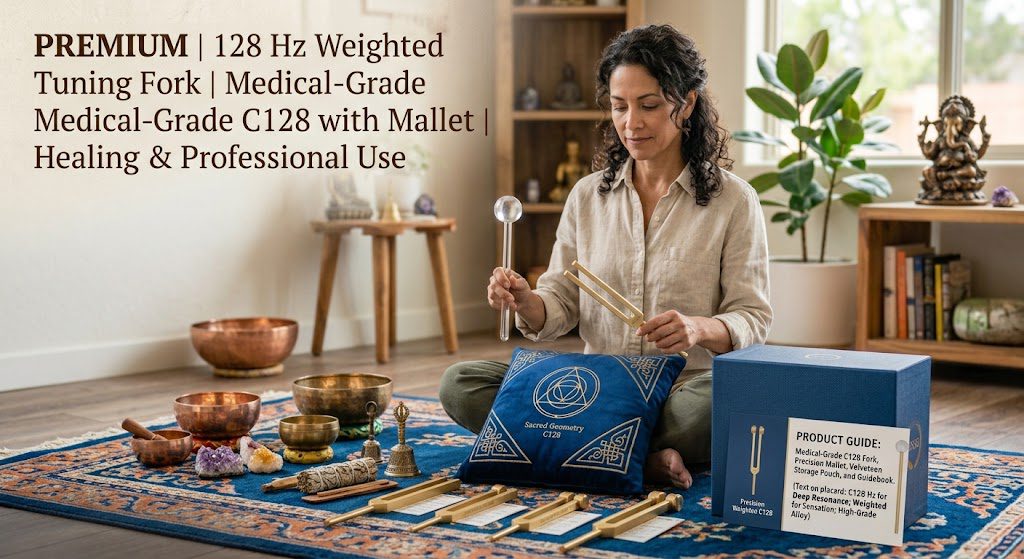
Carries the Amazon's Choice badge and comes with a silicone hammer, storage bag and cleaning cloth, so there is nothing extra to buy.
Trade-off: "medical" in the title is marketing. There is no consumer certification that makes a fork a medical device.
Check on AmazonWho should skip each
- Skip the bowl if you have very little space, noise-sensitive neighbors, or a sensitivity to loud, ringing sounds.
- Skip the fork if you expect a long, immersive sound. A single fading tone will not deliver that.
Frequently asked questions
Is a singing bowl better than a tuning fork for meditation?
For most people, yes. A bowl offers a longer, richer sound that supports sustained focus, and it has more (though still early-stage) research behind it for relaxation.
Can a tuning fork heal the body?
There is no credible peer-reviewed evidence that tuning forks heal medical conditions. They have real clinical use as diagnostic tools, and some people find them relaxing.
Do I need both?
No. Pick based on your space and how you will use it. Many people start with one.
Does the frequency number (432 Hz, 528 Hz) matter?
For relaxation, there is no good evidence that any specific number has special effects. Choose the tone that sounds pleasant to you.
Which is better for a small apartment?
A tuning fork, mainly because of volume and size.
Final verdict
Choose a singing bowl if you want a lasting meditation tool and a ritual centerpiece. Choose a tuning fork if you want a low-cost, quiet, portable tool for short grounding moments.
If a seller promises healing, DNA repair, or medical-grade results, walk away.
Sources and further reading
- Goldsby et al. (2017), "Effects of Singing Bowl Sound Meditation on Mood, Tension, and Well-being," Journal of Evidence-Based Complementary & Alternative Medicine. doi.org/10.1177/2156587216668109
- Thivolet et al. (1990), "Measuring vibration sensations with graduated tuning fork," Diabetes Care. PubMed 2209306
- Wayne State University School of Social Work, "Tibetan Singing Bowls" (summary of two studies)
- ClinicalTrials.gov, NCT06100406 (Biofield Tuning, anxiety)