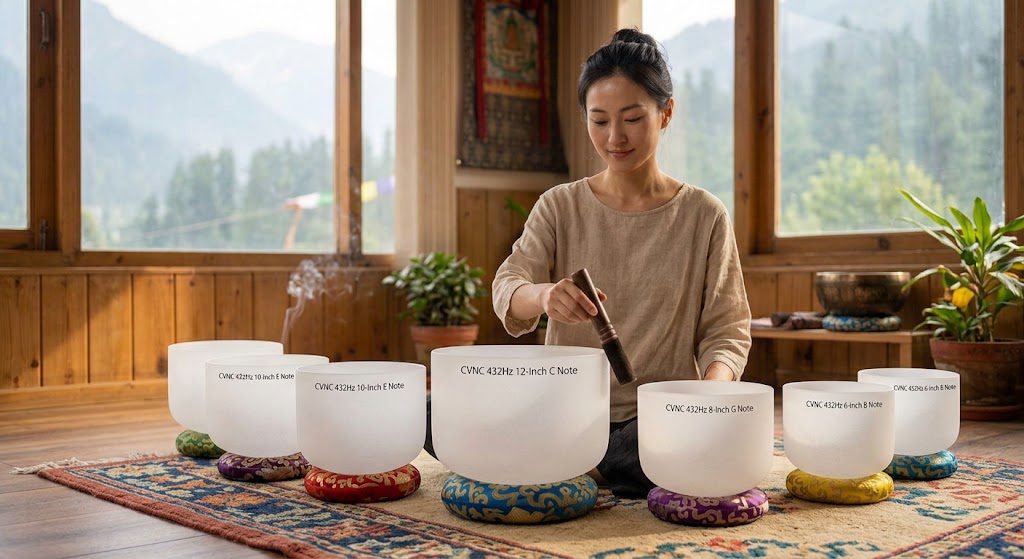
Side-by-side comparison
| Tibetan metal bowl | Crystal quartz bowl | |
|---|---|---|
| Material | Metal alloy, typically bronze or a copper-tin blend | Fused quartz (silica), usually described as 99.9% pure or higher |
| Sound | Layered and warm, with a pulsing wobble | Cleaner, more fundamental-dominated tone with fewer overtones |
| Typical size | Small to medium, often around 3 to 8 inches | Larger, commonly 6 to 14 inches on Amazon, up to about 2 feet overall |
| Durability | Tough. Handles bumps and travel | Fragile. Can crack or chip if knocked or dropped |
| Weight and portability | Lighter and easy to carry | Heavier. Needs padded cases and a rubber ring (O-ring) to sit on |
| Playing | Wooden or suede striker, or rim-circling | Rubber or suede mallet, often played on the rim |
| Cost level | Low to moderate | Generally higher per bowl |
| History | Bronze bowls have a long history, though how they were used is debated | A modern invention from the late 20th century |
| Best for | Solo meditation, beginners, travel | Sound baths, studios, group sessions |
How the sound really differs
Tibetan bowls are hand-hammered metal, and the irregularities of the metal produce a spread of overtones and a slow wobble. That is why the sound feels textured and "grounding" to many listeners.
Crystal bowls are fused quartz, which gives a cleaner, purer tone. Frosted crystal bowls in particular produce only a couple of strong partials, so the note sounds clear and simple. Many listeners describe it as glassy and expansive.
Neither is "better". If you want warmth and complexity, metal wins. If you want a clean, singing note that hangs in the air, crystal wins.
History: what is true and what is marketing
Crystal bowls are a late 20th-century invention, usually dated to the 1980s. They were never an ancient practice, and sellers who imply otherwise are stretching the truth.
Tibetan bowls are older, but the common story is more nuanced than sellers admit. Bronze bowls have a long, documented history across the Himalayas, but much of the "ancient sound healing instrument" framing is a 20th-century development, and scholars disagree about how these bowls were historically used. Also, many modern "Tibetan" bowls are factory-made, and some are artificially distressed to look antique.
What the research says
The best-known study is a 2017 observational study of 62 participants who completed a Tibetan singing bowl meditation. They reported lower tension, anger, fatigue and depressed mood afterwards. There was no control group, so it cannot prove the bowl caused the change rather than simply sitting quietly.
For crystal bowls, I did not find a rigorous head-to-head trial against metal bowls. Treat any claim that quartz is "more healing" or that its physical properties create special energy as unproven marketing. Judge the bowls by sound, build and how well you can use them.
Practical differences that matter
Tibetan bowl
- Space: small and quiet enough for a bedroom or desk.
- Travel: tough and light, so it goes in a bag.
- Risk: a drop usually dents it. It rarely ruins it.
- Learning: striking is easy. Rim-circling takes practice.
Crystal bowl
- Space: larger bowls need room and a stable surface.
- Travel: heavy and fragile. Use padded cases.
- Risk: a drop can crack it, and cracks cannot be repaired.
- Setup: use the rubber O-ring and the right mallet.
Buying checklist
Tibetan bowl
- Hand-hammered vs machine-made. Hammered bowls usually sound richer. Machine-made ones are cheaper and more uniform.
- "Antique" claims. Many are artificially aged. Do not pay extra for a distressed look.
- "Seven sacred metals." A popular sales line that is rarely verified.
- Include a striker and cushion. They matter more than decorative extras.
- Origin wording. Be skeptical of confident "authentic ancient Tibetan" claims.
Crystal bowl
- Frosted vs clear vs "alchemy". Frosted is the most common and the simplest in tone. Alchemy bowls add gemstone or metal infusions and cost more.
- "Made in USA" claims. Check carefully. Many frosted bowls are factory-made overseas.
- Included accessories. Look for an O-ring, mallet and padded case.
- Note labels (432 vs 440 Hz, "chakra tuned"). No evidence that any number has special effects.
- Return policy. Fragile items can arrive damaged. Read it first.
Top picks
These are popular options in each category on Amazon. Check the current listing for size, what is included, and today's price.
Himalayan Bazaar Premium Tibetan Singing Bowl Set

A handmade-in-Nepal set that has carried Amazon's Best Seller label in the singing bowl category. A sensible first bowl from a popular, proven listing.
Trade-off: sets at this level are usually small, so expect a higher, shorter tone than a large bowl. Check the size.
Check on AmazonSilent Mind Tibetan Singing Bowl Set
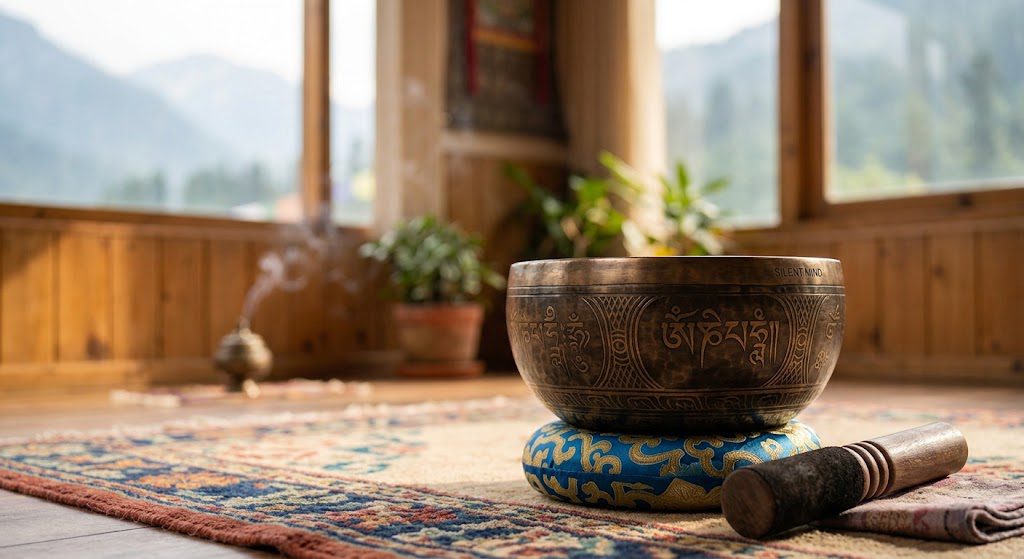
Aimed at beginners, with a cushion and a mallet included. It has ranked among the top few sellers in singing bowls.
Trade-off: compact (about 4 inches per the listing), so it suits personal meditation more than a large room.
Check on AmazonCVNC 432Hz 12-Inch C Note Frosted Quartz Crystal Bowl
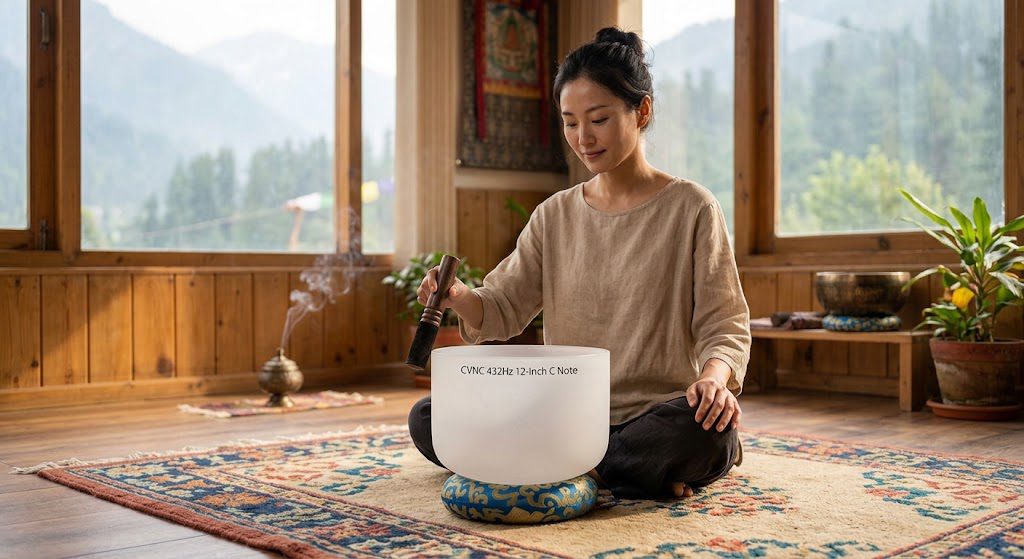
A single frosted quartz bowl that has carried the Best Seller label in singing bowls. A lower-commitment way to try crystal before buying a full set.
Trade-off: twelve inches is big, heavy and breakable. "Root chakra" naming is marketing, not a measured effect.
Check on AmazonCVNC 432Hz 6-12 Inch Frosted Crystal Bowl Set of 7
One of the higher-ranked crystal sets in singing bowls, and it comes with carry cases and mallets for sound-bath style playing.
Trade-off: a full set is a large purchase with real shipping and breakage risk. Be sure you want crystal first.
Check on AmazonWho should skip each
- Skip crystal if you have a small space, kids or pets that could knock it over, or you travel with your instrument.
- Skip Tibetan if you specifically want a clean, sustained, glassy tone for group sound baths.
Frequently asked questions
Is a crystal singing bowl better than a Tibetan one?
Not in any proven way. They sound different. Crystal is cleaner and more fragile. Tibetan is warmer, tougher and cheaper.
Which is better for beginners?
A Tibetan bowl, mainly because it is cheaper, lighter and much harder to break while you learn.
Are crystal bowls made from real crystals?
Crystal bowls are made from fused quartz (silica), not from carved gemstones. "Alchemy" bowls add gemstone or metal infusions.
Do 432 Hz or "chakra tuned" bowls work better?
There is no good evidence that any specific frequency or chakra label has special effects. Choose the tone you find pleasant.
Can I travel with a crystal bowl?
You can, but it needs a padded case and care. A Tibetan bowl is much easier to travel with.
Final verdict
Choose a Tibetan bowl if you want a durable, affordable, warm-sounding first bowl for personal practice. Choose a crystal bowl if you want a clean, resonant tone for sound baths and are ready for the extra weight, cost and fragility.
If a seller promises healing, special energy, or ancient origins for a crystal bowl, walk away.
Sources and further reading
- Goldsby et al. (2017), "Effects of Singing Bowl Sound Meditation on Mood, Tension, and Well-being," Journal of Evidence-Based Complementary & Alternative Medicine. doi.org/10.1177/2156587216668109
- Wayne State University School of Social Work, "Tibetan Singing Bowls" (summary of studies)
- Raven Sounds, "Crystal Singing Bowls vs Tibetan Metal Bowls" (history and construction, maker guide)
- The Five Elements, "Crystal Bowls vs Tibetan Bowls" (origin, durability, cost, retailer guide)
- Sacred Sound of the Soul, "Tibetan vs Crystal Singing Bowls" (manufacturing notes, retailer guide)