Mat care guide
How to Clean a Yoga Mat Without Ruining It
Most "how to clean a yoga mat" advice gives you one spray recipe and calls it done — but the right method depends entirely on what your mat is made of, and the wrong one can wreck the grip or break down the material. Here's the version that accounts for that.
The short answer
Wipe your mat with a diluted cleaner after every sweaty session, and deep clean it every one to two weeks. For most mats (PVC, TPE), a 1:3 white vinegar-to-water spray works well. For natural rubber, skip the vinegar — its acidity breaks rubber down over time — and use a very diluted mild soap instead. Always dry the mat completely before rolling it up.
Why your mat gets smelly in the first place
A yoga mat spends an hour pressed against bare skin, soaking up sweat and body oil with every downward dog. That alone would be manageable with a quick wipe — the real problem is what happens to mats with an open-cell surface, like natural rubber, cork, or microfiber-topped mats. Their surface is porous rather than sealed, so sweat and oil don't just sit on top; they work their way into the material itself. A surface wipe removes what's visible and leaves the rest to ferment, which is exactly where that lingering, slightly sour smell comes from.
Closed-cell mats — most PVC and TPE mats — don't have this problem to the same degree, since their surface is essentially sealed and sweat mostly stays on top where a wipe can actually reach it. That single difference is why a cleaning routine that works great for one mat can underperform on another, and it's the first thing worth knowing before you pick a method.
Know your material before you clean it
Check your mat's care tag or the manufacturer's product page — most brands state the material outright. Here's how the common types differ:
PVC & TPE mats
Sealed surface, sweat sits on top. Tolerates vinegar solutions, soap and water, and most commercial sprays without issue. The easiest material to keep clean.
Natural rubber mats
Porous and absorbent. Vinegar's acidity can break the material down over time, causing it to crumble — stick to a very diluted mild soap, and never submerge if the manufacturer advises against it.
Cork & microfiber-top mats
Absorbent surface that holds onto sweat and odor more than closed-cell types. Spot clean with water only or a very weak vinegar solution; avoid soaking cork specifically.
Combo / hybrid mats
Often a natural-fiber top layer bonded to a rubber base, which can sometimes be machine washed when fully assembled. Check the specific manufacturer's instructions rather than assuming — this is the category where generic advice goes wrong most often.
The daily wipe-down (after every sweaty session)
Lay the mat flat
A hard floor works better than carpet — it gives you a stable surface and keeps moisture from pooling into the backing.
Spray lightly
Use a diluted vinegar solution (for closed-cell mats) or a dedicated mat cleaner, misting rather than soaking the surface.
Wipe in one direction
A clean microfiber cloth lifts oils more effectively than scrubbing back and forth, which can just redistribute them.
Don't forget the underside
The bottom touches the floor, your bag, and your hands when you roll it up — it collects its own layer of grime that's easy to ignore.
Air dry before rolling
Rolling up a damp mat traps moisture against itself, which is the single fastest way to grow the smell you were just trying to remove.
The DIY vinegar spray, if you're making your own
Mix one part white vinegar to three parts water in a spray bottle — this is the ratio most mat-care guides converge on, strong enough to cut through oils without being so acidic it damages closed-cell materials. Add a few drops of tea tree or lavender essential oil if you want to mask the vinegar scent while it's still wet; it fades on its own once the mat is fully dry. Go easy on the oil, though — too much leaves a residue that can make the surface feel slippery rather than grippy.
Deep cleaning (every 1–2 weeks with regular practice)
A surface wipe handles what's sitting on top of the mat. A deep clean is for what's worked its way in — the reason a mat can look clean and still smell off.
Method 1: Soap-and-water soak
- Fill a bathtub with cool or lukewarm water — never hot, which can warp or soften some mat materials.
- Add a small amount of mild dish soap or a dedicated mat wash.
- Submerge the mat (if the manufacturer allows it) and let it sit for 15–20 minutes.
- Gently rub both sides with a soft sponge or cloth.
- Rinse thoroughly — soap residue left behind is the most common cause of a slippery mat afterward.
- Roll the mat in a dry towel and press to squeeze out excess water, then hang to air dry completely.
Method 2: Machine wash (only if the manufacturer says yes)
Some mats, mainly certain combo and microfiber-top styles, are machine washable — check the care label before assuming yours is one of them. Wash it alone on a gentle, cold cycle to avoid lint transfer or color bleed from other laundry, and skip the dryer entirely; air drying is the only safe option for virtually every mat material.
Worth knowing: many premium rubber mat brands explicitly say not to submerge their mats at all, recommending a damp-cloth wipe instead for anything beyond a light spray clean. If your mat is pricier or rubber-based, check the manufacturer's own care page before you fill the tub.
For stubborn odor: the baking soda soak
If a regular soap soak hasn't fully cleared a lingering smell, baking soda is worth adding to the mix — it works on odor through a different mechanism than soap, absorbing and neutralizing rather than just lifting surface oil. Fill the tub with cool water, stir in a few tablespoons of baking soda until it dissolves, and let the mat soak for 15 to 20 minutes before rinsing thoroughly and air drying as usual. This is a reasonable next step before reaching for a stronger enzymatic cleaner, and it's gentle enough to use on most materials when done in moderation.
Signs your mat is overdue for a deep clean
- It smells slightly off even right after a wipe-down, not just after a sweaty class
- The surface feels tacky or filmy rather than cleanly grippy when dry
- You can see discoloration or a dulled sheen where your hands and feet usually land
- It's been more than two weeks of regular use since the last real soak, not just a spray
Mistakes that damage the mat instead of cleaning it
Using vinegar on natural rubber
The acidity can break down rubber over time, leading to crumbling or a shortened lifespan. Diluted mild soap is the safer choice for this material.
Over-oiling a DIY spray
Essential oils smell nice but build up a film with repeated use — too much, and you'll notice your grip getting worse, not better.
Rolling it up damp
Trapped moisture is the single biggest cause of recurring odor and mildew. Always let the mat dry fully, unrolled, before storing it.
Skipping the rinse after a deep clean
Soap or vinegar left on the surface is what makes a freshly "cleaned" mat feel unexpectedly slippery in your next class.
Reaching for bleach or harsh household cleaners
Strong chemical cleaners can degrade foam and rubber faster than sweat ever would, and leave a residue that's harder to fully rinse out than soap or vinegar.
Leaving a damp mat in a hot car
Heat speeds up material breakdown and can warp closed-cell foam, on top of trapping the moisture that was already a problem. Dry fully indoors before transporting it anywhere.
Storing your mat between cleans
How you store a mat between sessions affects how often it actually needs a deep clean in the first place. A few habits make a real difference:
- Roll it loosely, practice-side out. A tight roll with the used surface facing in traps residual moisture against itself — rolling the other way lets it breathe.
- Avoid direct sunlight for long stretches. UV exposure breaks down foam and rubber over time, which is part of why a mat left permanently unrolled by a sunny window tends to degrade faster than one that's stored rolled.
- Skip the sealed mat bag until it's fully dry. Zipping a damp mat into an airtight bag is close to ideal conditions for mildew — let it air out first, even for just an hour, before it goes anywhere enclosed.
Mat cleaners worth buying instead of DIY
A vinegar spray is free and works, but if you'd rather not mix your own, these are well-reviewed, currently available options — chosen from their own listings and cross-checked buyer feedback, not personally tested by us.
Best overall
ASUTRA Yoga Mat Cleaner Spray
Organic essential oils · no slippery residue · microfiber towel included · 4 fl oz
Widely reviewed as leaving no sticky film behind, which is the exact complaint that sends people back to DIY sprays.
Check current price →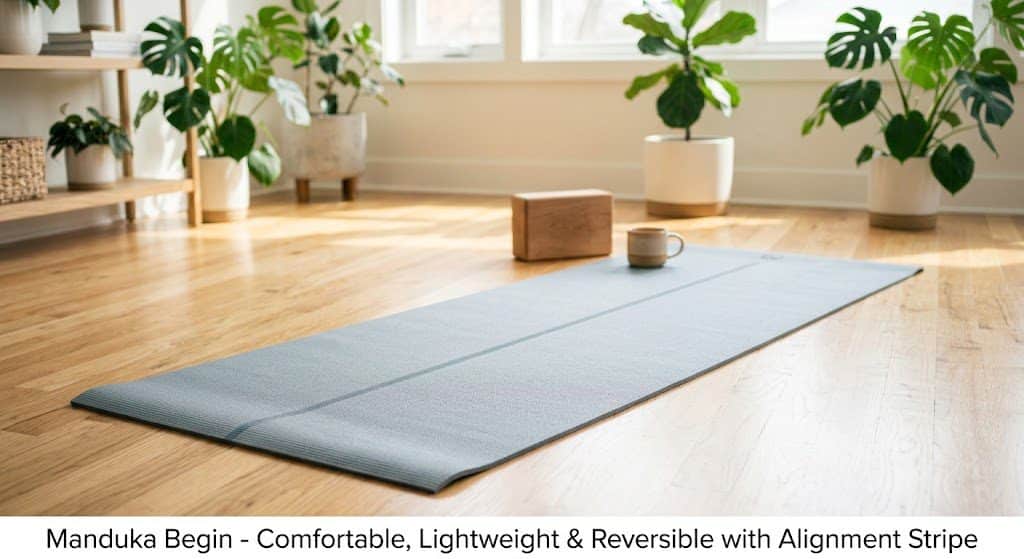
Best for premium mats
Manduka Natural Mat Wash & Refresh
100% natural · essential oils · pet-friendly formula · 8 oz
Made by a mat manufacturer with its own materials in mind — a reasonable default if you own a Manduka mat specifically.
Check current price →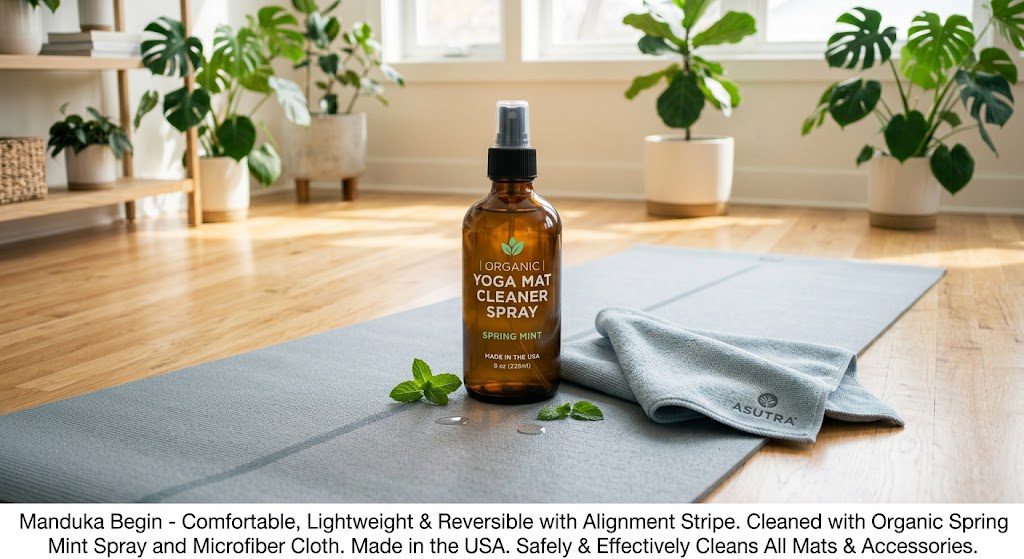
Best antibacterial pick
Gaiam Yoga Mat Wash
Tea tree, jojoba & lemongrass oils · non-sticky formula · antibacterial
The tea tree content is specifically aimed at the bacteria behind lingering odor, not just the smell sitting on top.
Check current price →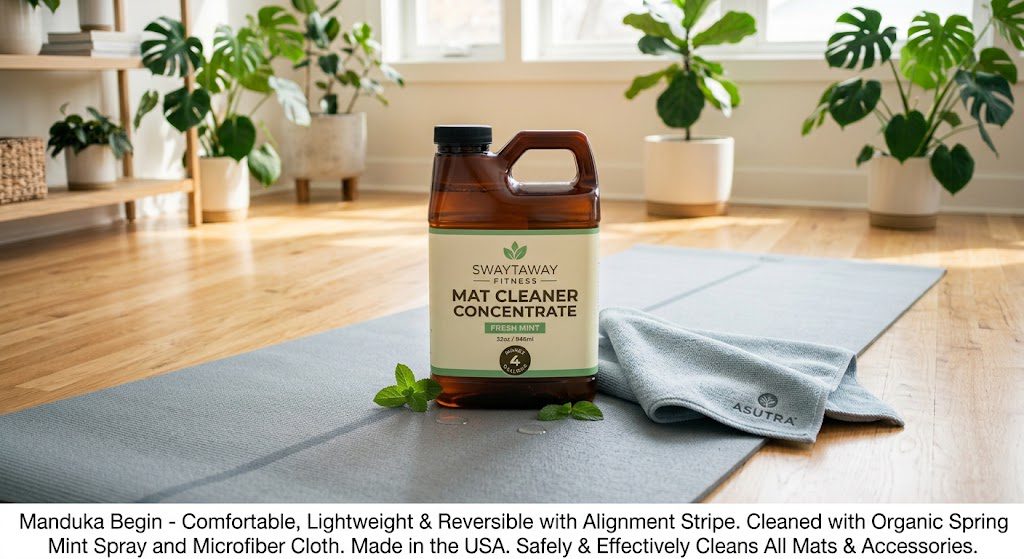
Best value
SwaytAway Fitness Mat Cleaner Concentrate
Reduces odor and sweat residue · budget-friendly · spray format
A reasonable middle ground if you want a dedicated spray without paying premium-brand pricing.
Check current price →Prices and availability shown on Amazon at checkout, not fixed here. Insert your own Amazon Associates link (via SiteStripe) for each product.
Before you deep clean
Always check your specific mat's manufacturer instructions before soaking or machine washing — materials and construction vary enough between brands that a method safe for one mat can damage another. When in doubt, a gentle spot clean is the safer default.
Getting into a regular practice? Our yoga poses for back pain guide covers nine gentle poses and the gear that supports them, including mats, blocks, and straps.
Common questions
How often should you clean a yoga mat?
Wipe your mat down after every sweaty session, and do a deeper clean every one to two weeks with regular practice. A mat used only occasionally can go longer between deep cleans, but a daily practice mat benefits from the weekly version to prevent oils and bacteria from building up in the surface.
Can you clean a yoga mat with vinegar?
Yes, for most closed-cell mats made of PVC or TPE, a solution of about one part white vinegar to three parts water works well as a natural cleaner and deodorizer. Natural rubber mats are the exception: the acidity in vinegar can break down rubber over time, so a diluted mild soap is the safer choice for that material.
How do I get the smell out of a yoga mat?
Persistent odor usually means sweat and oils have worked into the mat's surface rather than sitting on top of it, which a quick wipe won't fully remove. A full deep clean — either a soap-and-water soak or a machine wash if the manufacturer allows it — followed by complete air drying in a well-ventilated space usually clears a smell that a daily spray hasn't touched.
Can you put a yoga mat in the washing machine?
Only if the manufacturer says so — many mats, including most natural rubber ones, should never go in a washing machine, since the agitation and spin cycle can break down the material. Check your mat's care instructions first; if machine washing isn't approved, a hand soak or careful sponge cleaning is the safer deep-clean method.
Why is my yoga mat slippery after cleaning?
A slippery mat after cleaning almost always means leftover soap or cleaner residue sitting on the surface rather than being fully rinsed away. Go back over the mat with a cloth dampened in plain water only, and let it dry completely — the grip typically returns once the residue is gone.