Rosary meaning, parts & divisions
What Is a Rosary? A Plain Explanation of the Beads, the Prayer, and the Meaning
Whether you're praying it for the first time, choosing one for a First Communion or confirmation gift, or just trying to understand what each bead is for — here's the rosary explained clearly, without assuming you already know the terms.
What is a rosary?
A rosary is a string of prayer beads used in the Catholic tradition to keep count through a specific sequence of prayers, while meditating on moments from the life of Jesus and Mary. The word "rosary" refers to both the physical beads and the prayer itself — someone might say they're "praying the rosary" or that they're holding "a rosary," and both uses are correct.
The core idea behind it is simple, even though the structure looks complicated at first: repeating a small set of familiar prayers frees your mind from counting, so your attention can rest on the mystery you're reflecting on instead. The beads exist to do the counting for you.
Where the rosary comes from
Tradition credits Saint Dominic, a 13th-century Spanish priest, with popularizing the rosary after a vision of Mary. Historians note the fuller picture is more gradual: counted prayer using knotted cords or strung beads existed earlier, and the rosary as it's prayed today — the specific set of Mysteries, the Hail Mary in its current form, the five-decade structure — came together over several centuries, reaching roughly its present shape by the 1500s. Both the traditional account and the historical development matter to how Catholics understand the prayer's origin, and most parish teaching includes the Dominican tradition as the popularly held story.
Parts of a rosary
Every standard rosary has the same structure, whether it's made of wood, glass, or gemstone. Here's what each part is for:
A "chaplet" uses a similar bead-counting structure for a different, shorter devotion — it isn't a rosary, even though the two are often confused.
The divisions of the rosary — the Mysteries
The rosary is organized into four sets of Mysteries, each covering five events from the life of Jesus and Mary. A single rosary session usually focuses on just one set, traditionally matched to the day of the week, rather than all twenty mysteries at once.
MONDAY & SATURDAY
The Joyful Mysteries
- The Annunciation
- The Visitation
- The Nativity
- The Presentation
- Finding Jesus in the Temple
TUESDAY & FRIDAY
The Sorrowful Mysteries
- The Agony in the Garden
- The Scourging at the Pillar
- The Crowning with Thorns
- The Carrying of the Cross
- The Crucifixion
WEDNESDAY & SUNDAY
The Glorious Mysteries
- The Resurrection
- The Ascension
- The Descent of the Holy Spirit
- The Assumption of Mary
- The Coronation of Mary
THURSDAY
The Luminous Mysteries
- The Baptism of Jesus
- The Wedding at Cana
- The Proclamation of the Kingdom
- The Transfiguration
- The Institution of the Eucharist
The Luminous Mysteries are the newest addition, introduced by Pope John Paul II in 2002 — older rosary guides and some family heirloom prayer cards may only list the original three sets.
How to pray the rosary
Begin at the crucifix
Make the Sign of the Cross, then pray the Apostles' Creed while holding the crucifix.
Pray the introductory beads
One Our Father on the first large bead, then a Hail Mary on each of the next three small beads, then one Glory Be.
Announce the first Mystery
Name the first Mystery from the set you're praying (for example, the Annunciation), then pray one Our Father on the large bead.
Pray the decade
Ten Hail Marys, one per small bead, while continuing to hold that Mystery in mind. Finish with one Glory Be.
Repeat for all five Mysteries
Move to the next large bead, announce the second Mystery, and repeat the decade structure — continuing through all five.
Close the rosary
After the fifth decade, pray the Hail Holy Queen at the centerpiece, then make the Sign of the Cross to finish.
New to this: it's common to lose count or forget which Mystery you're on, especially the first few times — that's not a sign you're doing it wrong. The beads exist precisely so you don't have to hold the count in your head; if you drift, just find where your fingers are on the string and continue from there.
Choosing a rosary
Beyond material and appearance, three practical things are worth checking before buying:
- Bead material and durability — glass and crystal beads catch the light beautifully but chip more easily than wood, acrylic, or knotted cord; a rosary meant for daily carrying holds up better in a sturdier material.
- String construction — individually knotted cord between beads (common in paracord and higher-end designs) means a break loses at most one or two beads rather than scattering the whole strand; simple wire-linked construction is more common at lower price points.
- Size and occasion — a full-size rosary is standard for regular prayer; smaller "auto" or pocket rosaries and wrist rosaries trade some bead size for portability, which matters if it's going in a car, a bag, or a child's pocket.
Rosaries worth considering
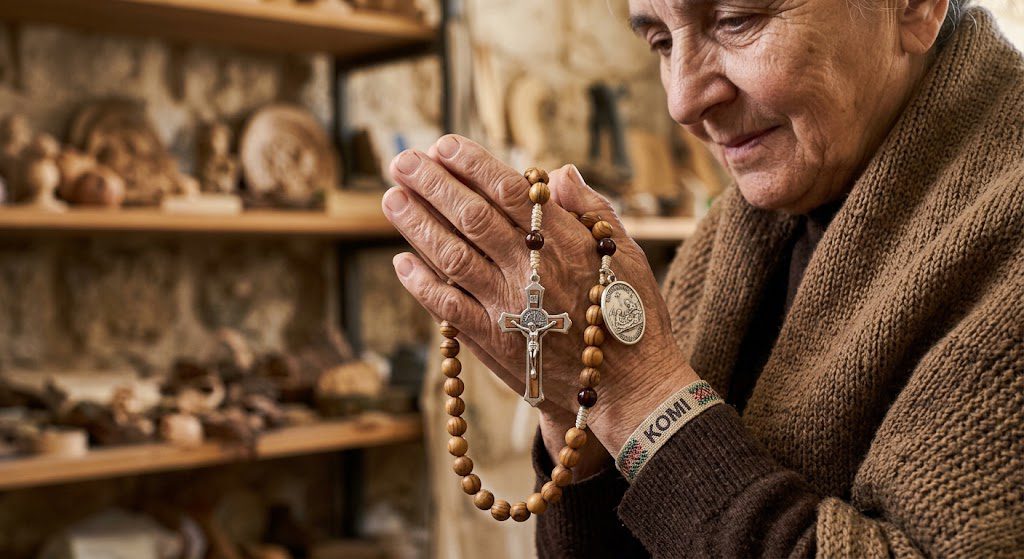
Best for meaningful origin
Handmade Catholic Rosary — Bethlehem
Handmade in Bethlehem · traditional five-decade structure · crucifix and centerpiece medal
Made in the region tied to the Nativity itself — a detail that matters to a lot of buyers looking for a rosary as a meaningful gift, not just a functional one.
Check current price →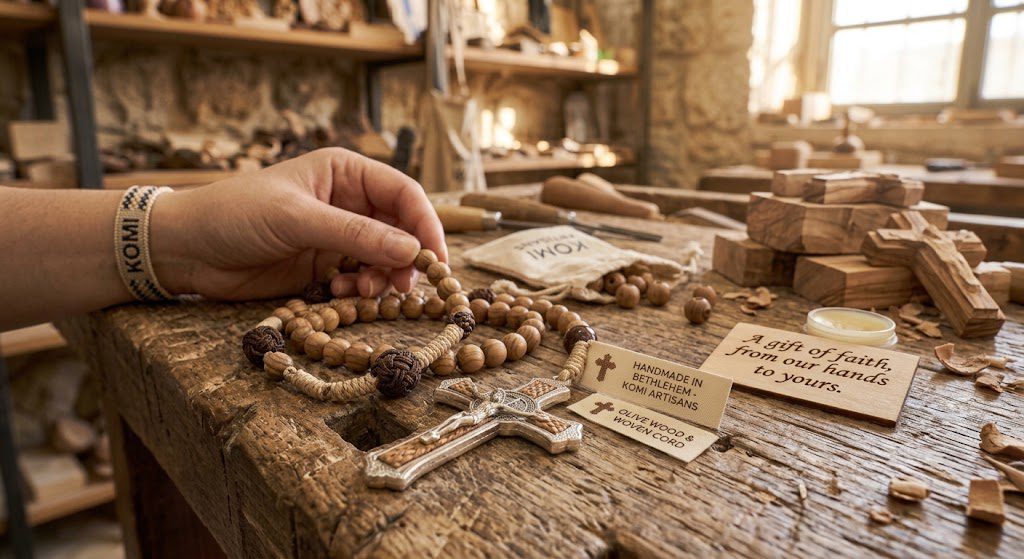
Best woven construction
Handmade Woven Catholic Rosary
Woven cord construction · handmade · gift-ready presentation
Woven cord tends to hold up better to daily handling than simple wire links — worth considering if this is going into regular use rather than a display case.
Check current price →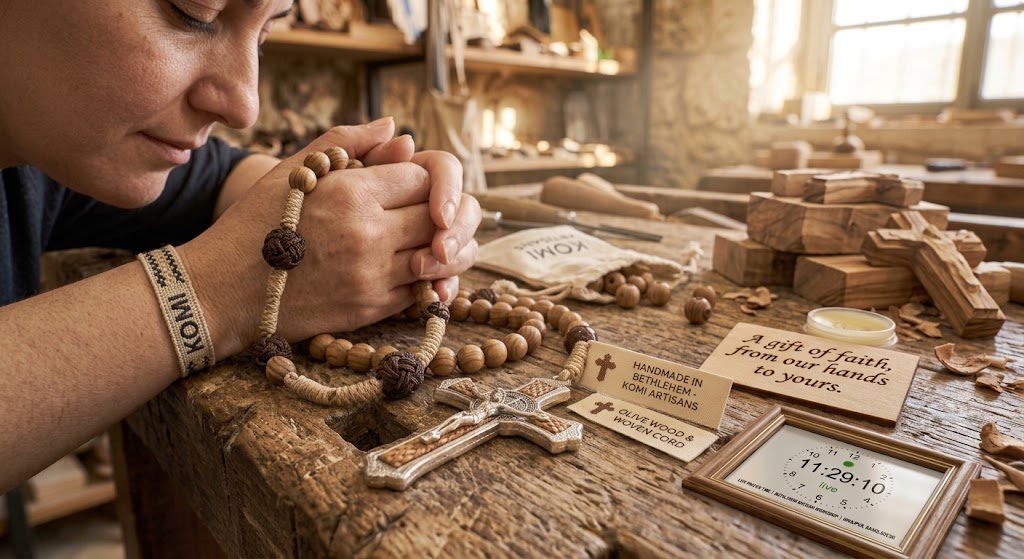
Best for First Communion
Sanctum Veritas Communion Rosary
Communion-specific design · Christian religious presentation · gift packaging
Framed specifically around the Communion occasion — a fitting pick if you're shopping for that milestone rather than everyday prayer use.
Check current price →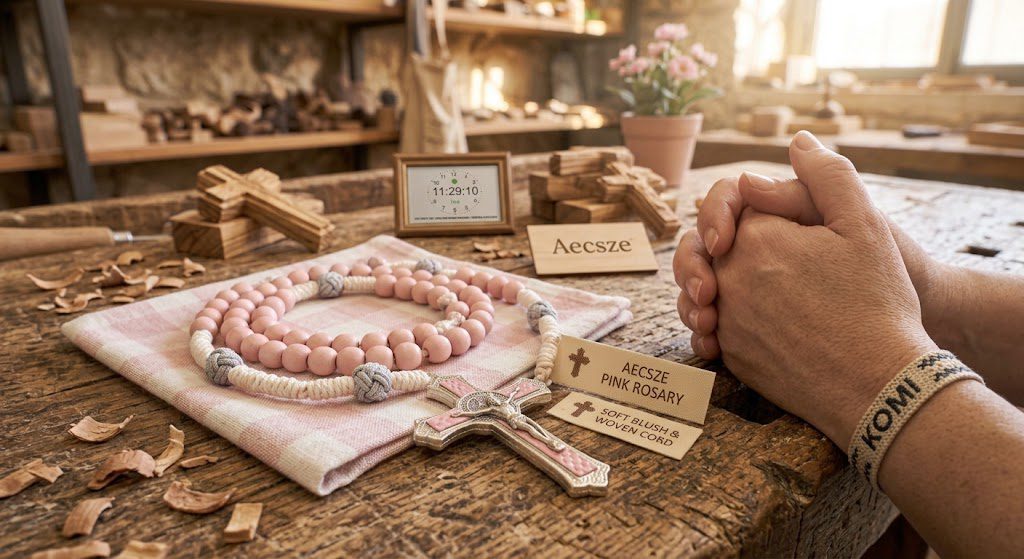
Best pink rosary
Aecsze Pink Rosary Beads
Pink beads · standard five-decade structure · crucifix and centerpiece
A common request for a First Communion, confirmation, or birthday gift for a girl or woman — same standard structure, in a color that suits the occasion.
Check current price →Prices and availability shown on Amazon at checkout, not fixed here — they change often enough that a printed number would be wrong within weeks.
Common questions
What is a rosary?
A rosary is a string of prayer beads used in the Catholic tradition to count a specific sequence of prayers while meditating on events from the life of Jesus and Mary, known as the Mysteries. The word also refers to the prayer itself, not just the physical object used to pray it.
What does the rosary mean, and where does it come from?
Praying the rosary is an act of Marian devotion and meditation, structured around repeating the Hail Mary while reflecting on moments in the lives of Jesus and Mary. Tradition credits Saint Dominic in the 13th century with popularizing it, though historians note the practice developed gradually from earlier forms of counted prayer using knotted cords or strings of beads, reaching roughly its current form by the 16th century.
What are the divisions or mysteries of the rosary?
The rosary is organized into four sets of Mysteries, each with five events: the Joyful Mysteries, the Sorrowful Mysteries, the Glorious Mysteries, and the Luminous Mysteries, which were added by Pope John Paul II in 2002. Each set is traditionally prayed on specific days of the week, and a full rosary session focuses on just one set rather than all twenty at once.
Is "Rosaria" the same as a rosary?
Rosaria isn't a standard English term for the object — it most often shows up as a given name derived from the same root, or as a variant of "Rosario," the Spanish and Italian word for rosary. If you're searching for the prayer beads themselves, "rosary" is the term used in English-language Catholic practice.
What's the difference between a rosary and general prayer beads?
A rosary is a specific Catholic devotional tool with a fixed structure: a crucifix, a set of introductory beads, and five decades of ten beads each, built for a particular sequence of prayers. "Prayer beads" is a broader term covering beads used across many traditions — Buddhist and Hindu malas, Muslim misbaha, and others — which differ in count, structure, and the prayers or mantras they accompany.